
RUSSALITE
The Rare Siberian Gem
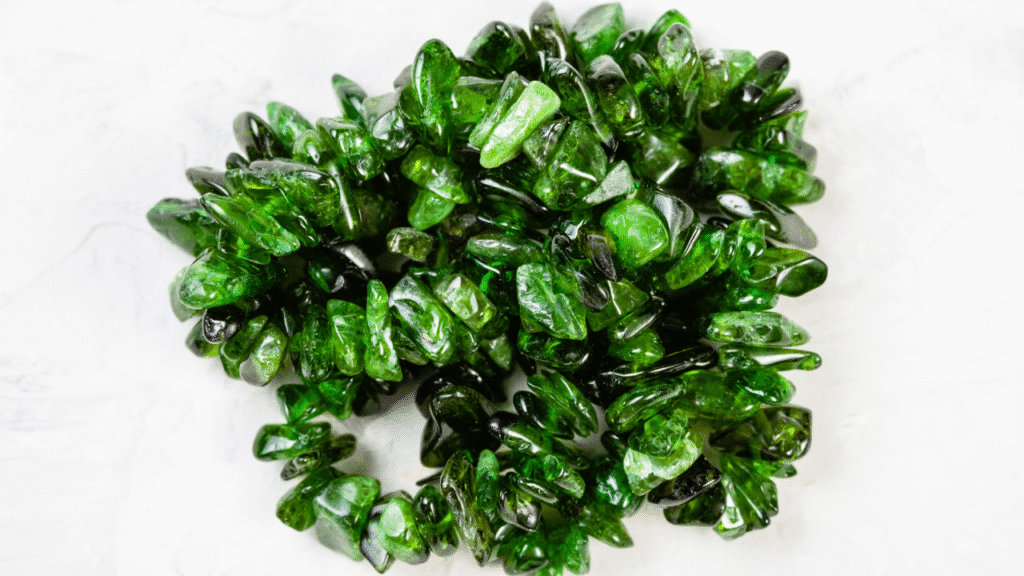
Russalite is a distinctive gemstone known for its beautiful green color. Its unique appearance makes it an interesting and sought-after gem for collectors and gemstone enthusiasts.
1. What Is Russalite?
Russalite is one of the youngest gemstones discovered, known for its striking green color. What we call Russalite is actually Chrome Diopside, a gemstone variety of the mineral diopside. Diopside itself is a calcium and magnesium silicate mineral, but when chromium impurities are present, it transforms into the vibrant green Chrome Diopside used in jewelry. Its vivid colors make it highly attractive to collectors and gemstone enthusiasts.
2. Color and Appearance
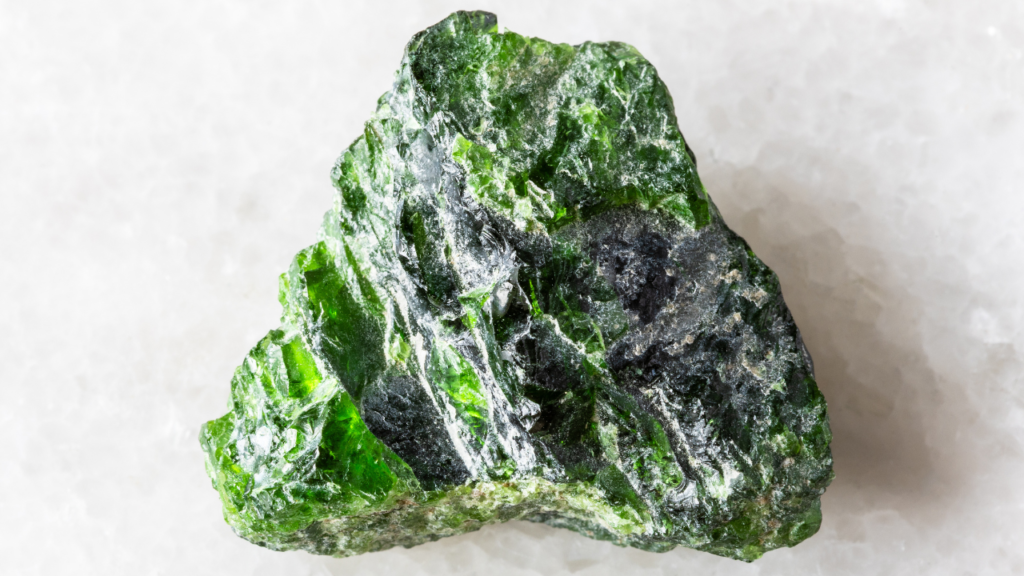
Russalite’s green color ranges from bright grassy shades to deep, almost black forest green. This range of hues makes each gemstone unique. The presence of chromium gives it its rich color and also serves as a natural indicator that diamonds may be found nearby. Its lush green tones make Russalite especially appealing to nature lovers.
3. Discovery and Rarity
Russalite was discovered relatively recently, in 1988, in Eastern Siberia, Russia. Mining is extremely limited due to harsh weather conditions, occurring only about three months per year. Even then, only around 10% of the rough stones are suitable for polishing, making polished Russalite rare and highly collectible. These factors contribute to its exclusivity in the gemstone market.
4. Global Sources
While Siberia is the primary source, Russalite can also be found in Pakistan, Afghanistan, Myanmar, and Madagascar. Each location produces stones with slightly different shades and characteristics, adding variety for collectors. Its limited global availability reinforces its status as a unique and desirable gem.
5. Russalite hardness
Russalite has a hardness of 5.5 on the Mohs scale, making it moderately soft compared with many other gemstones. It should be handled with care to avoid scratches and surface damage.
6. How to Clean Russalite
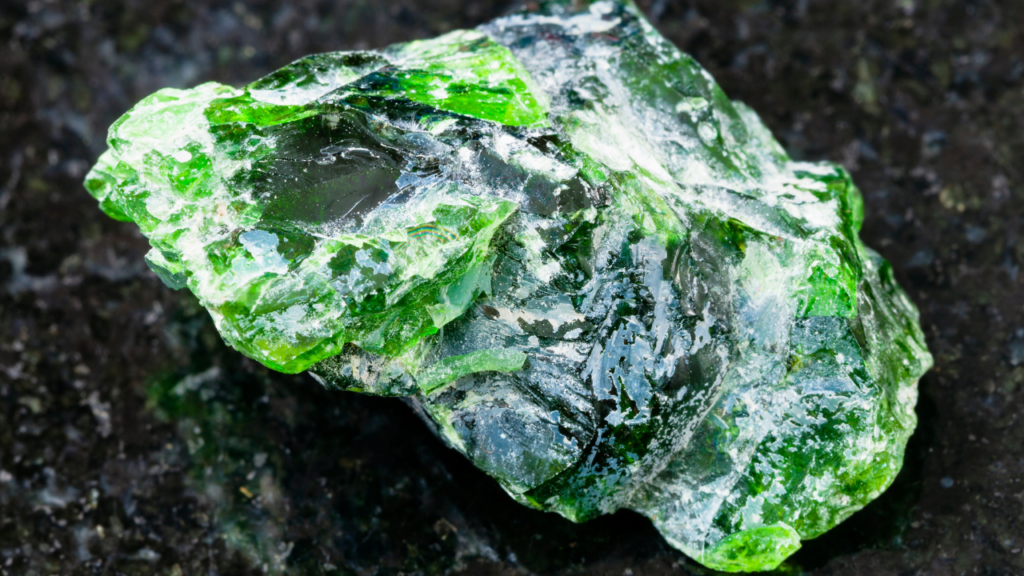
Russalite can be gently cleaned with warm soapy water and a soft brush to remove dirt and everyday residue. Rinse it carefully with clean water and pat it dry with a soft cloth. Avoid harsh chemicals, steam, and ultrasonic cleaners to help protect the gemstone.
7. Refractive index
The refractive index measures how a gemstone bends light, affecting its brilliance and visual appearance. Russalite has a refractive index of approximately 1.67–1.70, contributing to its natural reflections and subtle sparkle.
Inspired by the remarkable beauty of russalite, discover the Gemstone Fusion Wall Art Collection, a curated set of three artistic pieces designed to capture the unique colors and character of this extraordinary gemstone.

📌 Russalite: Summary
- Chrome Diopside variety with vivid green color
- Striking green color from chromium impurities
- Shades from bright grass green to deep forest green
- Discovered 1988, Siberia; rare and collectible
- Mining is limited to ~3 months per year
- Only ~10% of rough is gem quality
- Also found in Pakistan, Afghanistan, Myanmar, Madagascar
- Hardness 5.5; clean gently with soap and water