
IOLITE
The Viking’s Compass and Water Sapphire
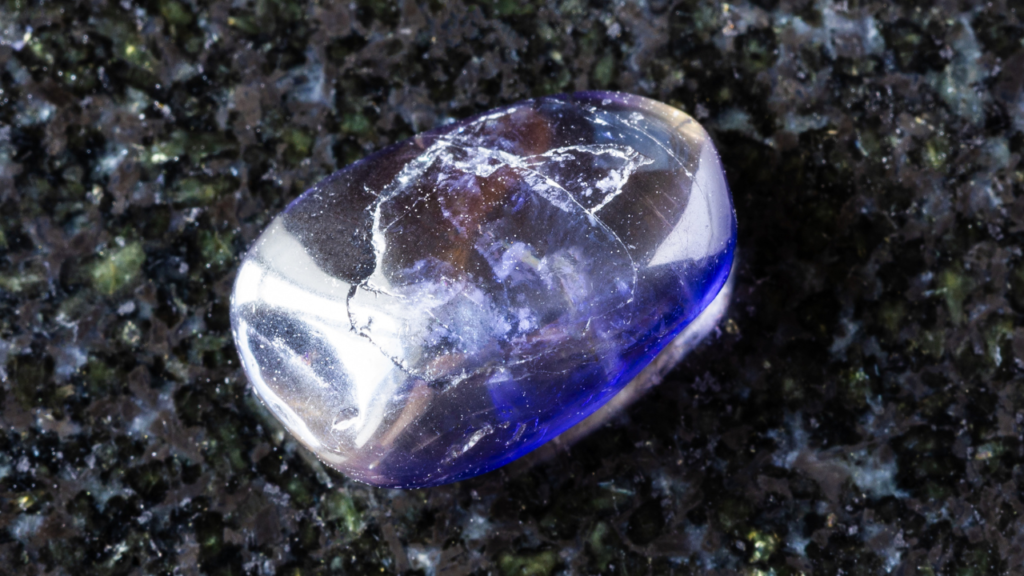
Iolite is a fascinating gemstone renowned for its remarkable optical properties, rich history, and intriguing legends.
1. What Is Iolite
Iolite, also known by its mineral name Cordierite, is a silicate composed of aluminum, iron, and magnesium. It was discovered in 1813 in Spain and officially named after Louis Cordier, a French mineralogist and geologist who first studied the species. When this mineral forms in transparent violet-blue shades, it becomes known as Iolite, a gemstone admired for its captivating color and sparkle.
2. What Color Is Iolite
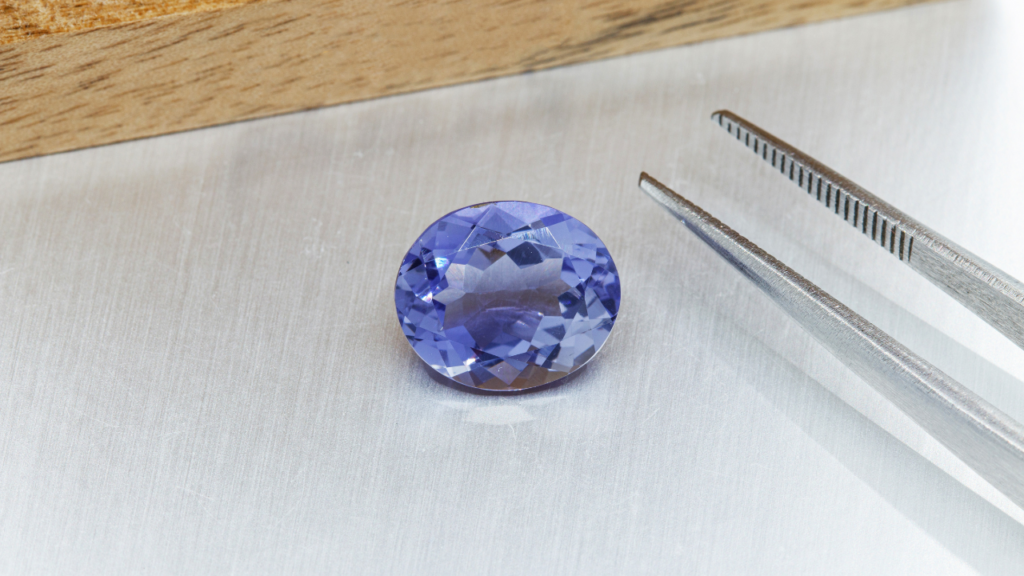
Iolite gemstone is often mistaken for sapphire, which is why it has also been called the “Water Sapphire.” Although it shares a similar color, Iolite is a completely different mineral. Its beauty lies in its pleochroism – the ability to display different colors when viewed from various angles. From one direction it may appear deep blue, while from another it can look almost clear like water.
3. The Legend of the Viking’s Compass
Iolite has long been associated with navigation and discovery. It is sometimes called the “Viking’s Compass,” as legend says that Vikings used thin slices of Iolite to locate the sun on cloudy days. The name Iolite comes from the Greek word “ios,” meaning “violet,” perfectly describing its rich hue. Because of its resemblance to tanzanite and sapphire, Iolite is often used as a more affordable alternative in jewelry.

4. Characteristics and Rarity
Due to its intense pleochroism, Iolite is a challenging stone to cut and facet, requiring great precision. It cannot be heat-treated to deepen its color because of its low melting point. Most faceted gems weigh two carats or less, while larger stones above five carats are rare. The largest known Iolite crystal, discovered in Wyoming, USA, weighed over 24,000 carats.
5. Refractive index
Iolite’s refractive index of 1.542–1.551 indicates how strongly it bends light as it passes through the gemstone. This moderate refractive index contributes to iolite’s attractive brilliance, although it is lower than that of sapphire or diamond.
6. How to Clean Iolite
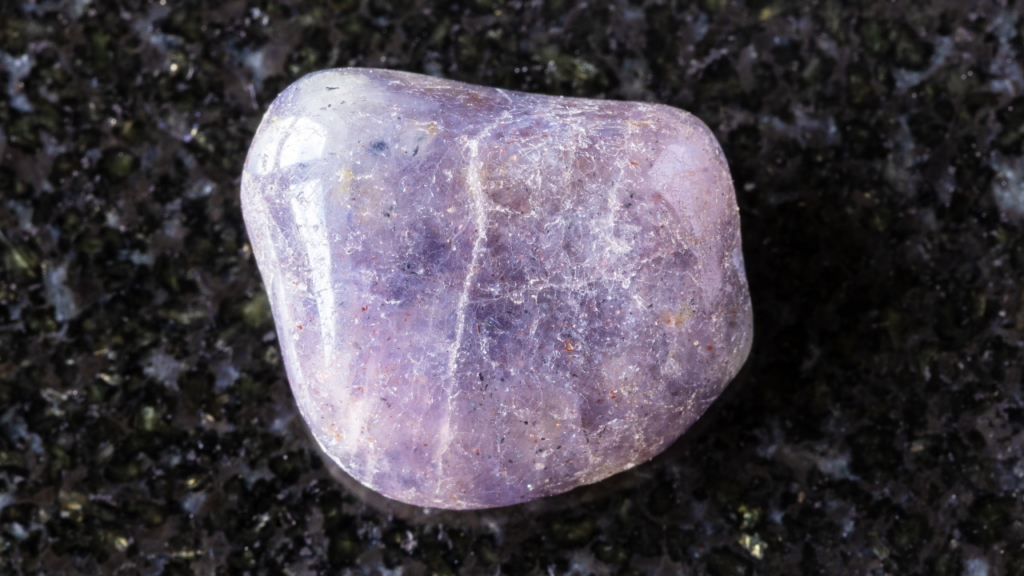
The safest way to clean iolite is with warm water, mild soap, and a soft cloth or soft brush. Avoid ultrasonic and steam cleaners, as well as harsh chemicals and sudden temperature changes, which can damage or fracture the stone.
Inspired by the remarkable beauty of iolite, discover the Gemstone Fusion Wall Art Collection, a curated set of three artistic pieces designed to capture the unique colors and character of this extraordinary gemstone.

📌 Iolite: Summary
- A violet-blue gemstone variety of the mineral cordierite
- Famous for its color-changing pleochroism
- Often called “Water Sapphire” due to its resemblance to sapphire
- Named from the Greek word “ios,” meaning “violet”
- Called the ‘Viking’s Compass’ for its use in navigation
- Typically found in stones under 2 carats, with larger sizes being rare
- Cannot be heat-treated to enhance color
- Given as a traditional 21st-anniversary gemstone