
Tourmaline
More colors than any other gemstone
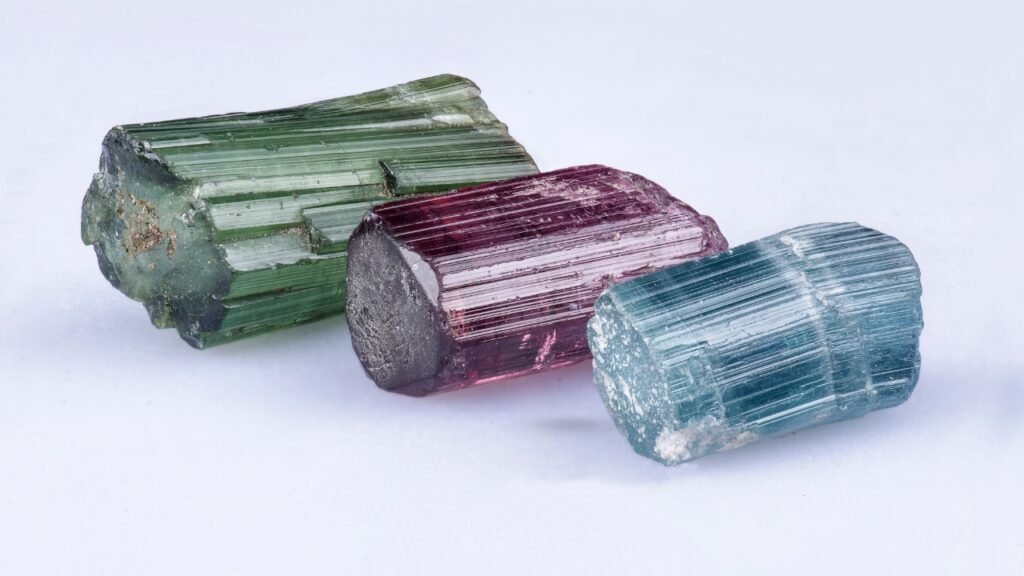
A Gem of Many Colors
Tourmaline is the gemstone with the widest range of colors in the world. Its shades can vary so widely that it was often mistaken for other gemstones throughout history. Portuguese explorers in the 1500s sent green and blue stones to Portugal, thinking they were sapphires and emeralds, when in fact they were Tourmalines. Even some Russian crown jewels from the 17th century, believed to be rubies, turned out to be Tourmalines. The stone’s stunning diversity makes it a favorite among collectors and jewelers alike.
A Family of Minerals
Tourmaline is not a single mineral, but a large group of boron silicate minerals. These minerals share similar physical and chemical properties, which links them together scientifically. It was officially recognized as a distinct mineral in 1793. The name “Tourmaline” comes from the Sinhalese word “Toramalli,” meaning “mixed color stone,” reflecting its incredible variety. Today, jewelers and gemologists use trade names to communicate the different colors clearly to their customers.
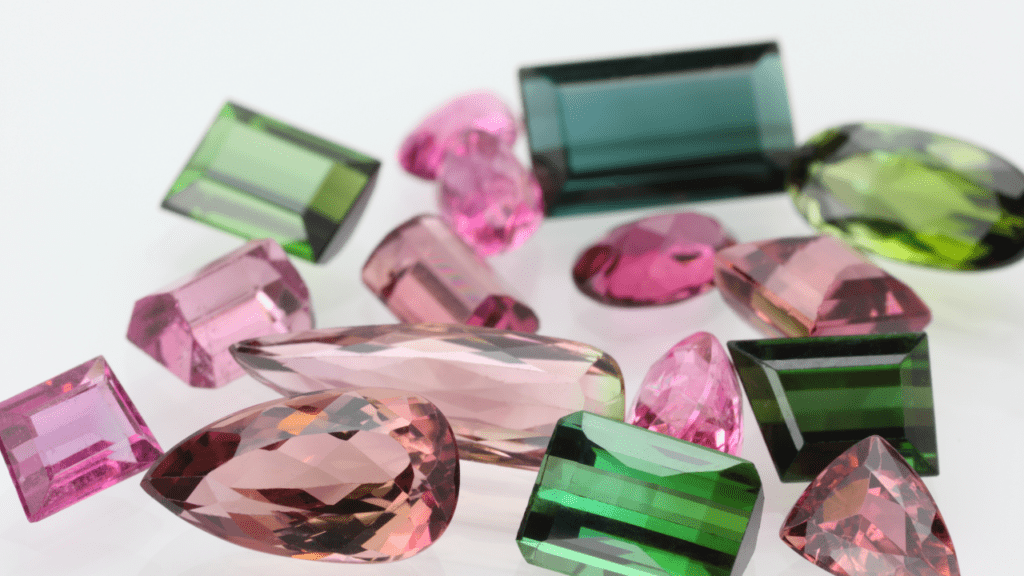
Color Names and Varieties
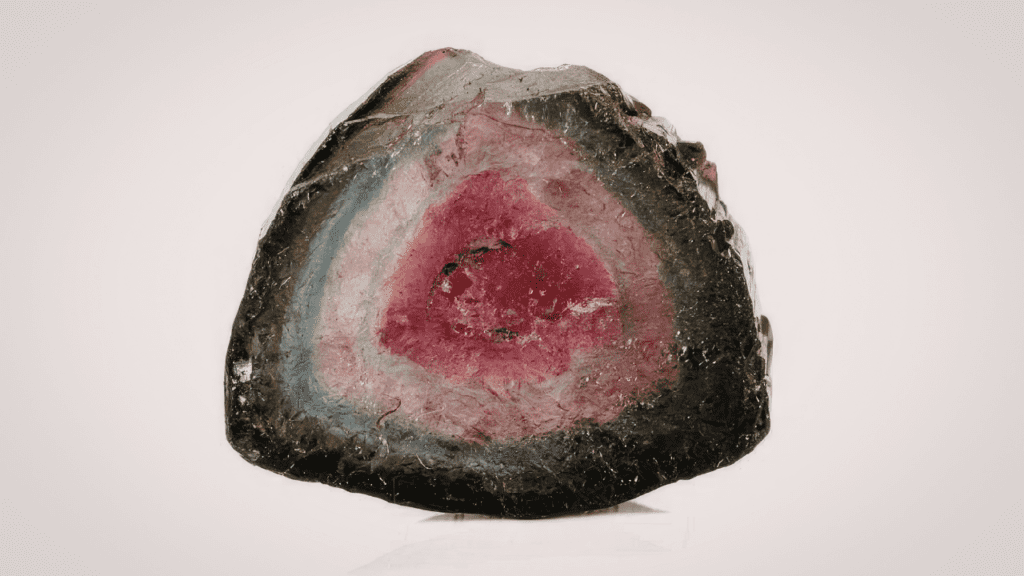
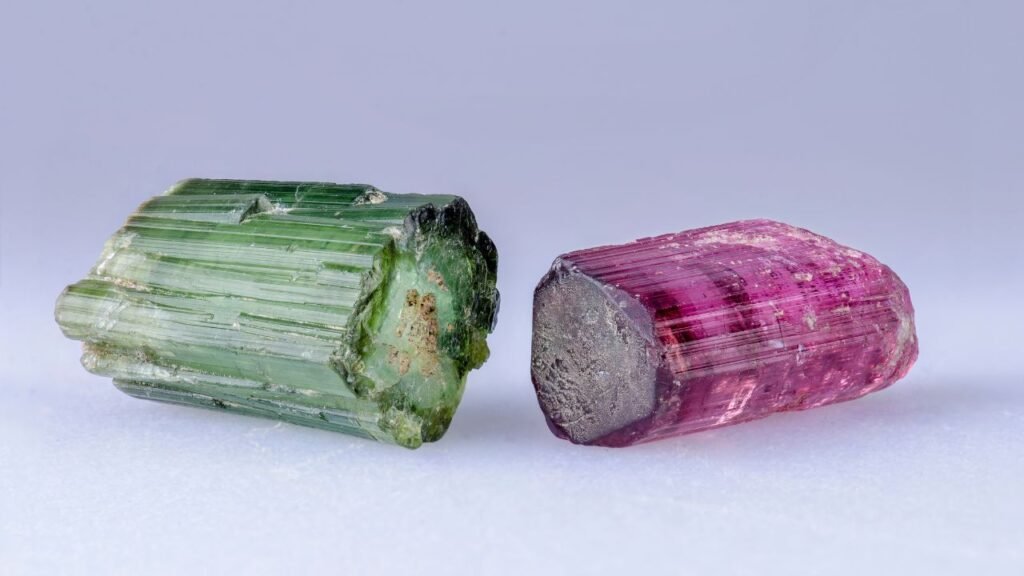
Different colors of Tourmaline have unique trade names. Red Tourmaline is called “Rubellite,” while blue Tourmaline is known as “Indicolite.” Green Tourmaline, colored by chromium or vanadium, is called “Chrome Tourmaline,” and black Tourmaline is known as “Schorl.” Some Tourmalines display more than one color and are referred to as “Party-colored Tourmaline.” A special type, “Watermelon Tourmaline,” is often cut in slices to show its unique color arrangement.
Rare and Valuable Stones
Among Tourmalines, the “Paraiba Tourmaline” stands out for its spectacular neon-blue color. Its vibrant hue and rarity make it one of the most valuable in the world. Tourmaline gemstones are found in multiple countries, including Brazil, Afghanistan, Pakistan, Kenya, Madagascar, Tanzania, Mozambique, and the United States (California). Each origin produces stones with slightly different characteristics, adding to the gem’s appeal and diversity.
Symbolism and Significance
Tourmaline carries rich symbolic meaning and is believed to promote happiness, reduce fear, and build self-confidence. It is recognized as the birthstone for October and is traditionally given for the 8th wedding anniversary. Its wide range of colors allows it to suit many personal styles and tastes. Beyond its beauty, Tourmaline has a reputation for bringing positive energy and emotional balance to its wearer.
Durability and Care
Tourmaline ranks 7 to 7.5 on the Mohs scale of hardness, making it suitable for jewelry worn daily. Despite its durability, it still requires gentle care to maintain its brilliance. The best method to clean Tourmaline is with warm, soapy water and a soft toothbrush. Avoid harsh chemicals or ultrasonic cleaners, which can damage the stone. Proper care ensures that the gem retains its color and sparkle for generations.
📌 Tourmaline: Summary
- Gemstone with widest color range
- Trade names: Rubellite (red), Indicolite (blue),
Chrome (green), Schorl (black) - Rare Paraiba Tourmaline: neon-blue
- Mined in Brazil, USA, Africa, and Asia
- Mohs hardness 7–7.5
- October birthstone
- 8th anniversary gem