
OPAL
Gem with Up to 21% Water
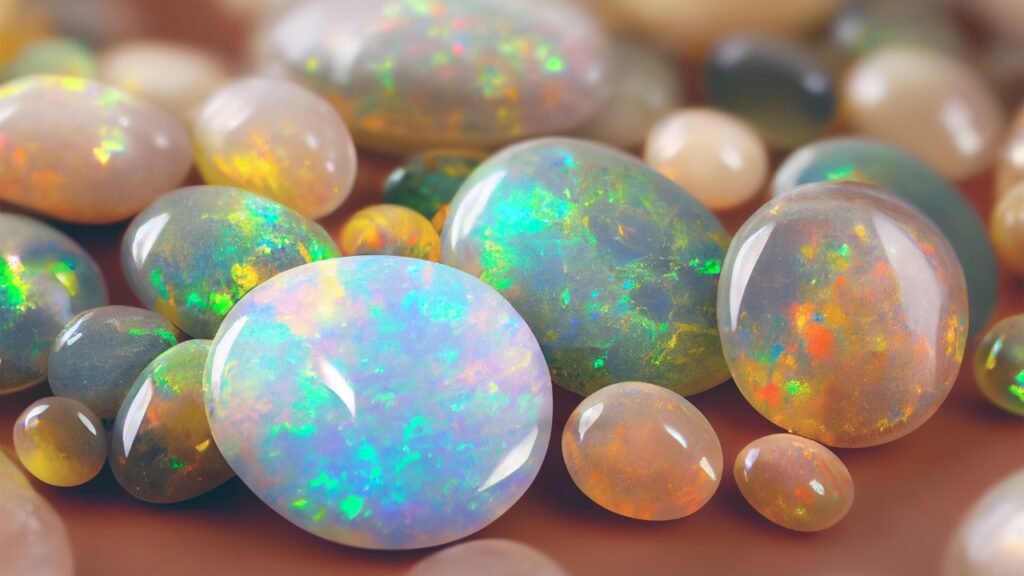
Opal has been admired for centuries and has played a fascinating role in the history of gemstones. From its ancient origins to its place in modern jewelry, opal has remained a gemstone of lasting interest.
1. What Is Opal
Opal is a unique gemstone made of hydrated amorphous silica, which means it doesn’t have a regular crystal structure. It can contain between 3% and 21% water by weight, though most opals have around 6% to 10%. This high water content gives opal its soft, delicate feel and makes it different from most other gemstones. Its formation process is closely linked to nature’s cycles of rain and evaporation.
2. How Opal Forms
Opal forms when water from seasonal rains runs through the earth, picking up silica from sandstone. During dry periods, the water evaporates and leaves behind solid deposits of silica in cracks and sedimentary rocks. Over time, these silica deposits gradually build up, eventually forming opal. This slow natural process can take thousands of years.
3. Ancient Names of Opal
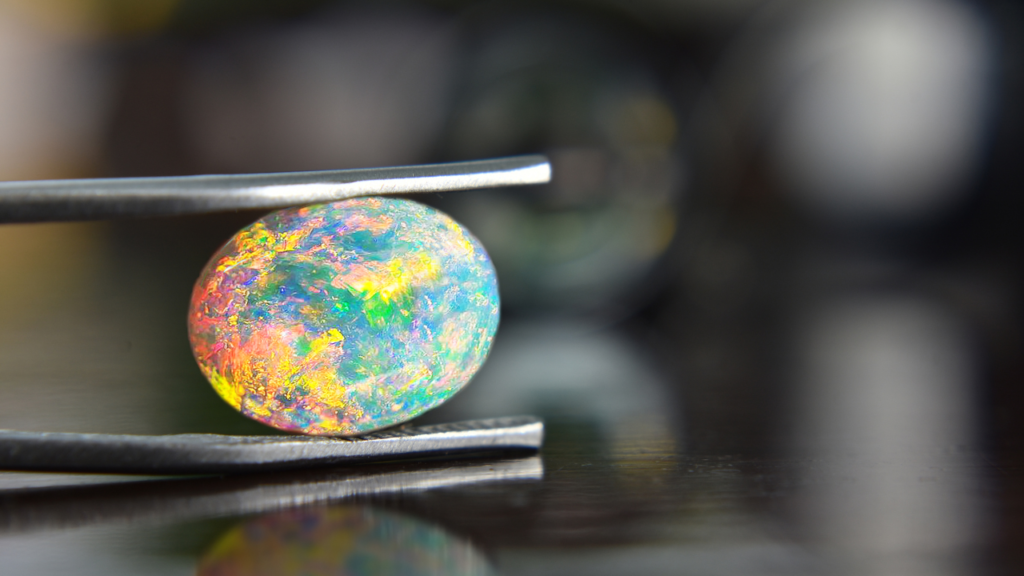
Throughout history, opal has been considered a very special gemstone. In ancient Rome, it was known as “Opalus,” and in Sanskrit, it was called “Upala,” meaning “precious stone.” People once believed that opal embodied the qualities and powers of all other gemstones. Its beauty and mystery have made it highly valued for centuries.
4. Types of Opal
Opals are classified into two main groups: precious and common. Precious opal displays a phenomenon called “play-of-color,” where flashes of different colors appear across the stone, while common opal does not show this effect. Within these groups, opals are further divided into five main types: White or Light Opal, Black Opal, Fire Opal, Boulder Opal, and Crystal or Water Opal.
5. Main Sources of Opal
Opals are mined in many parts of the world, including Madagascar, Ethiopia, Mexico, Brazil, Honduras, Indonesia, Peru, Turkey, and the USA. However, the most productive and famous opal mining region is Australia. Each location can produce stones with slightly different colors, patterns, and qualities. Collectors often seek opals from specific regions for their unique beauty.
6. Hardness of Opal
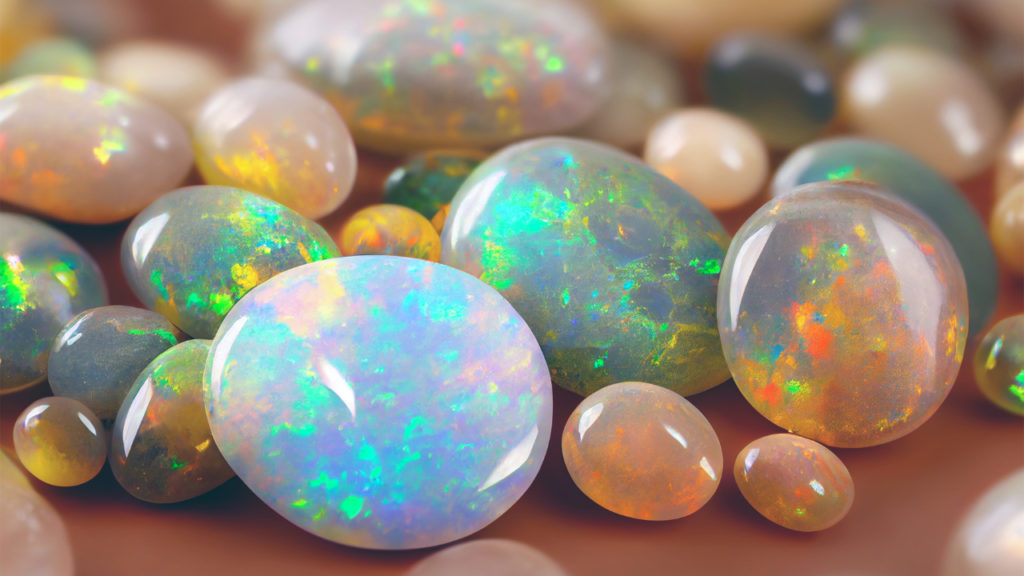
Opal is relatively soft compared to many other gemstones, with a hardness of 5 to 6.5 on the Mohs scale. Because of its lower hardness, opal can be scratched more easily and should be handled carefully.
7. How to Clean Opal
The safest way to clean opal is with mild soap, warm water, and a soft toothbrush or cloth. Avoid harsh chemicals and ultrasonic cleaners, as they can damage the stone. Gently clean the opal and dry it with a soft cloth afterward.
8. Refractive index
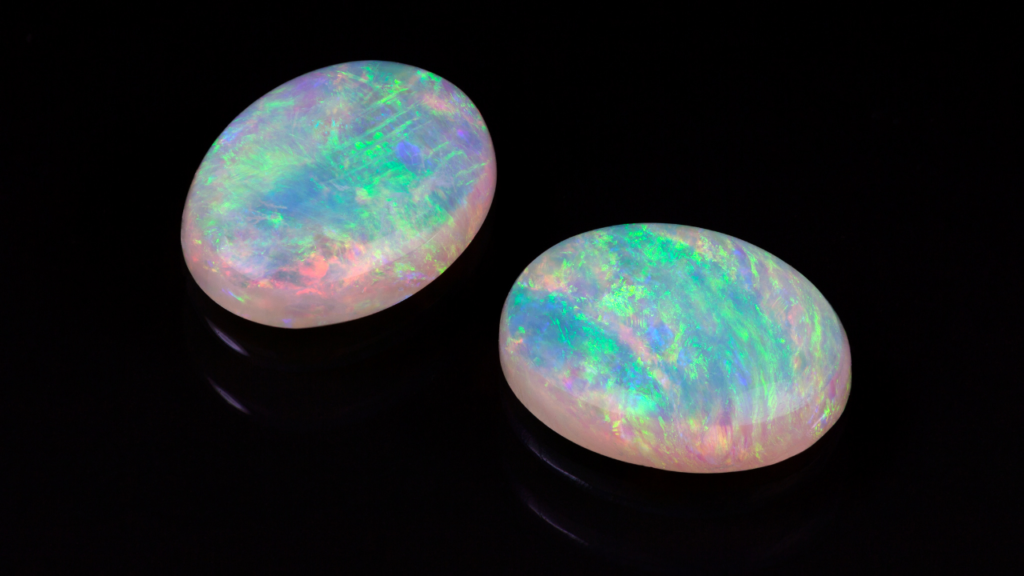
Opal has a refractive index of approximately 1.37–1.45, which describes how light bends as it passes through the gemstone. This relatively low refractive index gives opal a soft, subtle appearance rather than the strong brilliance seen in gemstones with higher refractive indices.
Inspired by the remarkable beauty of opal, discover the Gemstone Fusion Wall Art Collection, a curated set of three artistic pieces designed to capture the unique colors and character of this extraordinary gemstone.

📌 Opal: Summary
- Hydrated amorphous silica with 3–21% water content
- No crystal structure, unlike most gemstones
- Known for play-of-color (rainbow flashes)
- Forms from silica deposits left by evaporating water
- Two types: precious opal and common opal
- Main types: white, black, fire, boulder, crystal opal
- Major source: Australia, also Ethiopia, Mexico, Brazil, USA
- Mohs hardness: 5–6.5
- Birthstone for October