
MOONSTONE
The Mineral Known for Its Magical Adularescence
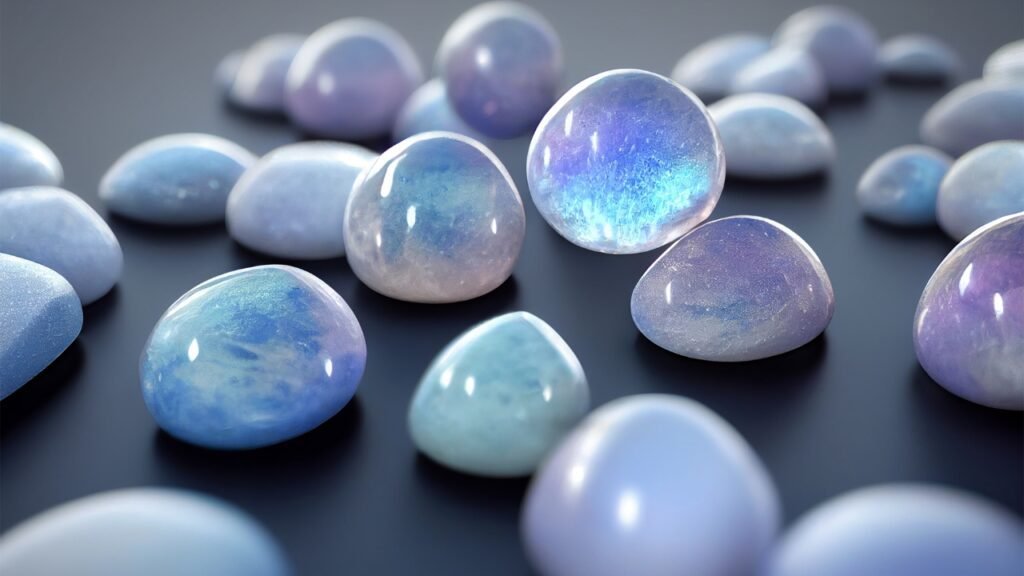
Moonstone is a gemstone that has been admired for centuries and remains popular in jewelry and collections today. Its history, mineral composition, and distinctive optical properties make it an interesting gemstone to explore.
1. What Is Moonstone
Moonstone is a mineral that belongs to the feldspar group, which is the most abundant group of minerals in the Earth’s crust. It is made of layered albite, which is potassium-rich aluminum silicate, and orthoclase, which is sodium-rich aluminum silicate. These layers are responsible for moonstone’s unique visual effects.
2. What Color Is Moonstone
It can appear in many body colors, including white, gray, brown, pink, orange, green, yellow, and even colorless. While all colors are valued, the most prized moonstone is a clear stone with a blue glow.
3. Special optical effect
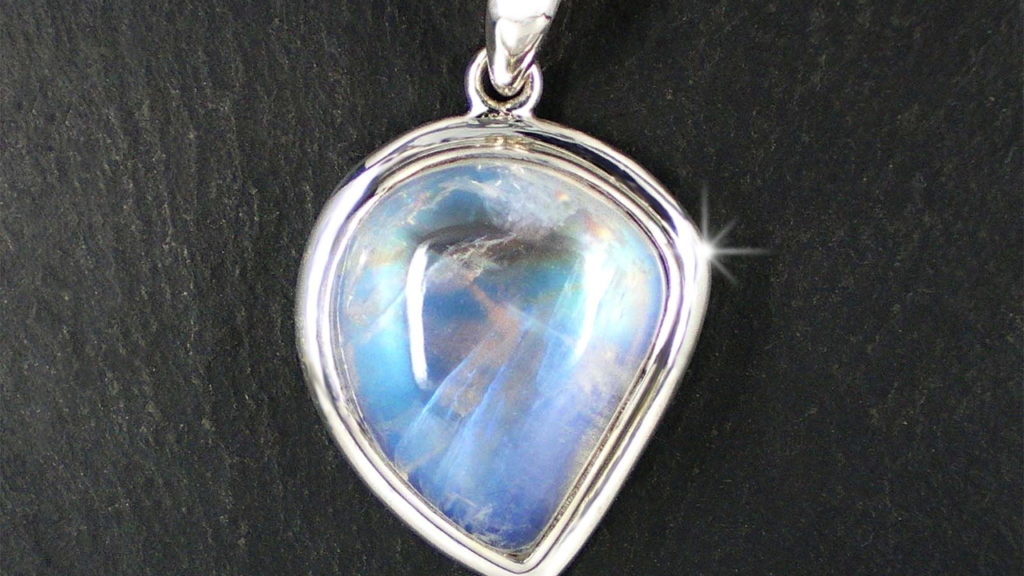
Moonstone is best known for a special optical effect called adularescence. This effect appears as a soft, glowing light that seems to float just beneath the surface of the stone. It is often described as looking like moonlight reflecting across calm water. The glow shifts as the stone moves under light, creating a magical and delicate appearance.
4. Moonstone in History
Moonstone has been used in jewelry since ancient times. The Romans believed it was formed from solidified rays of the moon. In modern history, moonstone gained popularity during the Art Nouveau period for its soft and mystical appearance. It became fashionable again in the 1960s during the Flower Child movement and later during the New Age movement of the 1990s.
5. Main Sources of Moonstone
The most important sources of fine-quality moonstone today are Sri Lanka and India. These regions are known for producing stones with strong adularescence and good clarity. It is also found in other parts of the world, including Brazil, Madagascar, Myanmar, and Tanzania. Each location can produce stones with slightly different visual characteristics.
6. Hardness of Moonstone
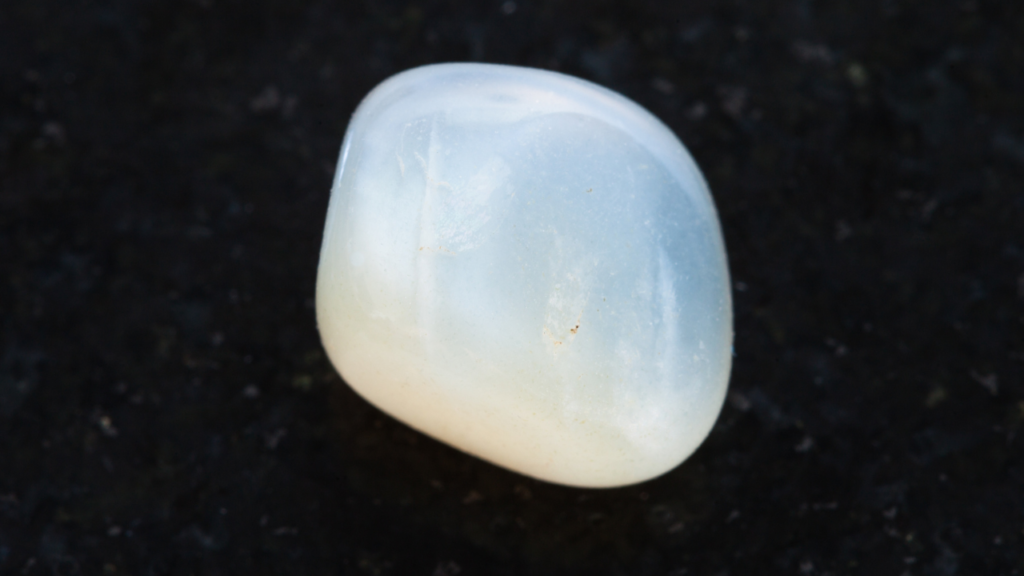
Moonstone has a hardness of 6 to 6.5 on the Mohs scale, making it suitable for jewelry when handled properly. Because it is softer than many commonly used gemstones, it can be scratched by harder materials. For this reason, moonstone jewelry should be handled carefully during everyday wear.
7. How to Clean Moonstone
Moonstone should be cleaned gently to preserve its surface and glow. The safest method is to use a soft toothbrush dipped in warm, soapy water. Gently scrub the stone without applying pressure, then rinse it carefully. Dry the Moonstone with a soft cloth to prevent scratches and maintain its natural beauty.
8. Birthstone for June
Moonstone is one of the traditional birthstones for June. It has long been associated with this month in birthstone traditions. Today, it remains a popular choice for June birthday jewelry.
9. Refractive index
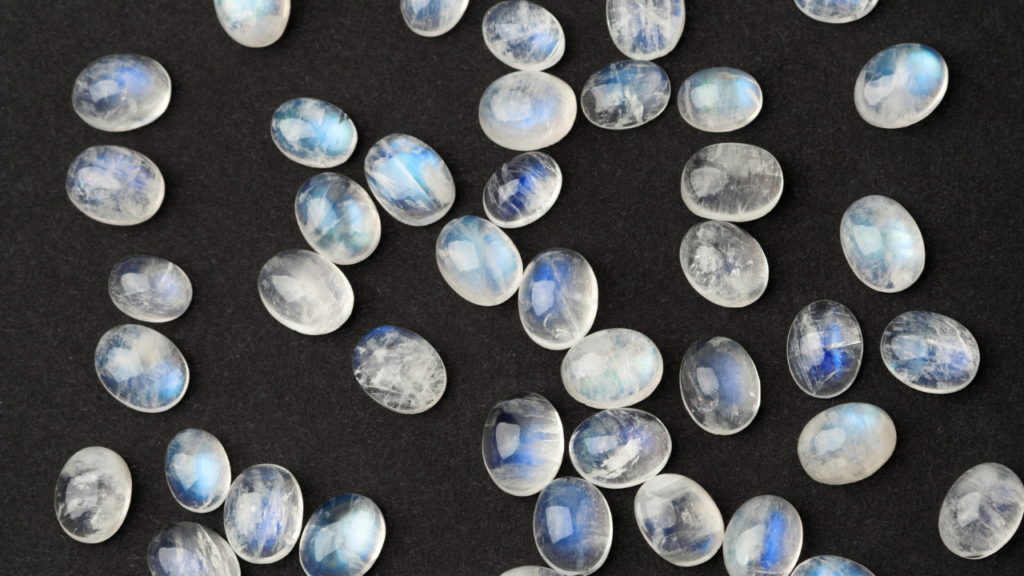
Moonstone has a refractive index of approximately 1.518–1.526, which describes how strongly light bends as it enters the stone. This relatively low refractive index contributes to its soft, subtle reflection rather than a sharp, brilliant sparkle.
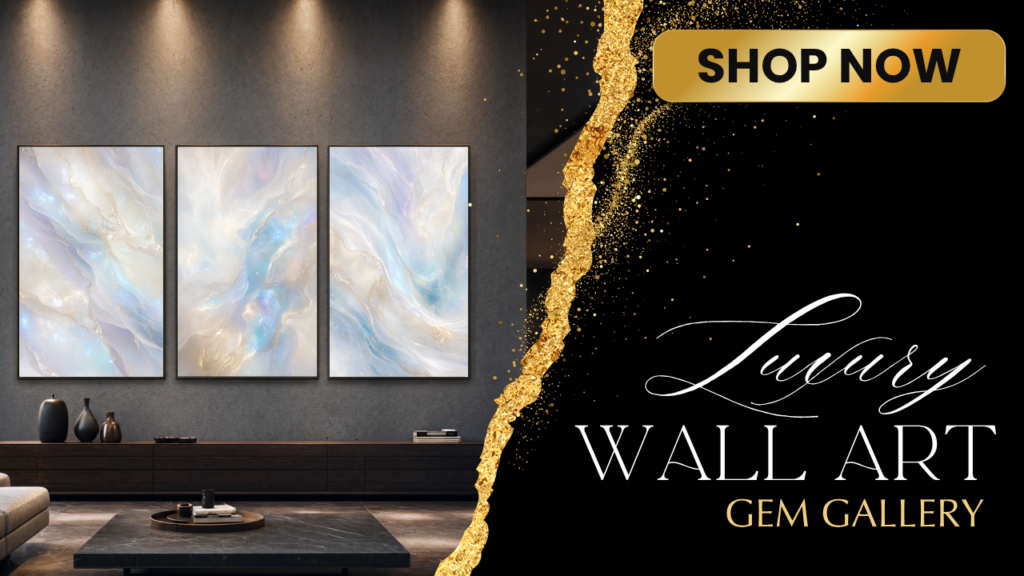
Inspired by the remarkable beauty of moonstone, discover the Gemstone Fusion Wall Art Collection, a curated set of three artistic pieces designed to capture the unique colors and character of this extraordinary gemstone.
📌 Moonstone: Summary
- Belongs to the feldspar mineral group
- Famous for adularescence (floating moonlight glow)
- Colors: white, gray, brown, pink, orange, green, yellow, colorless
- Most prized: clear stones with a blue shimmer
- Major sources: Sri Lanka, India; also Brazil, Madagascar, Myanmar, Tanzania
- Mohs hardness: 6–6.5
- Birthstone for June