
MOLDAVITE
The Extraterrestrial Gem

Moldavite has a story that begins far beyond the Earth, with an extraordinary event that took place thousands of years ago. From that dramatic moment came a natural material that would later become known around the world as moldavite.
1. What Is Moldavite
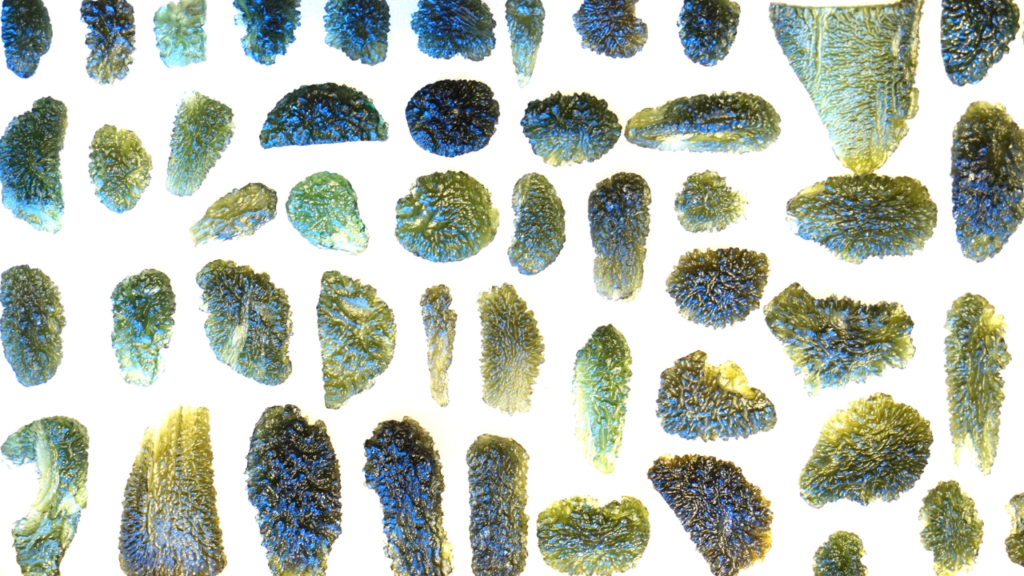
Moldavite is a rare type of natural glass rock that belongs to the mineral group called Tektites. It is known for its unique green shades, ranging from olive green and forest green to blue-green. This gemstone often contains fascinating swirls and bubbles inside, giving it a distinctive mossy appearance.
2. The Origin of the Name
Moldavite was first recognized in 1787 under the name “chrysolite.” In 1836, scientists renamed it “moldavite” after a major source near the Moldau (Vltava) River in Bohemia, Czech Republic. The name reflects its geographic origin and has been used ever since.
3. How Moldavite Was Formed
Moldavite was formed about 15 million years ago when a meteorite struck southern Germany, creating the Nördlinger Ries crater. The extreme heat from the impact melted parts of the Earth’s surface. This molten material was thrown into the atmosphere, where it cooled, hardened, and fell back to Earth, mostly in what is now the Czech Republic. This dramatic formation process gives moldavite its unique structure and appearance.
4. Strewn Fields and Sources of Moldavite
The areas where moldavite landed after the meteorite impact are called “strewn fields.” The largest and most famous strewn field is in Bohemia, while smaller areas are found in Moravia, Austria, and Germany. These regions remain the primary sources of authentic moldavite today. Because it is naturally rare, moldavite is highly prized among collectors and gem enthusiasts.
5. Appearance and Inclusions
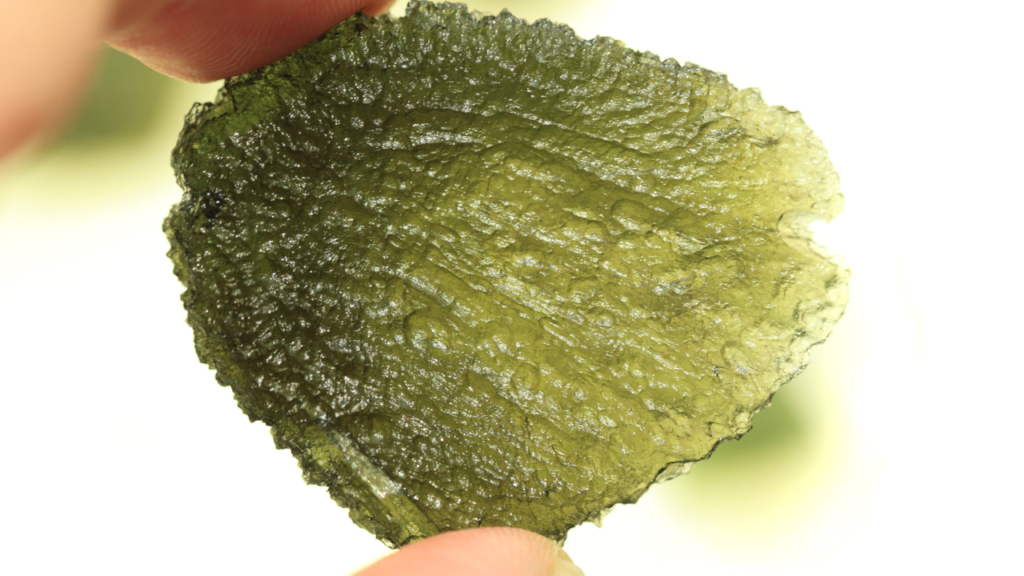
Moldavite can be transparent or translucent, often with internal swirls and bubbles that enhance its green color. It can be distinguished from green glass imitations by worm-like inclusions of lechatelierite, a mineraloid formed during meteorite impacts. These unique inclusions make each piece of moldavite one-of-a-kind.
6. Hardness of Moldavite
Moldavite has a hardness of 5 on the Mohs scale, making it moderately soft compared with many commonly used gemstones. Because it can be scratched or chipped, moldavite jewelry should be handled and worn with care.
7. How to Clean Moldavite
The safest way to clean moldavite is with lukewarm water, mild soap, and a soft cloth or brush. Avoid harsh chemicals, ultrasonic cleaners, and sudden temperature changes, as these can damage or fracture the stone.
8. Refractive index
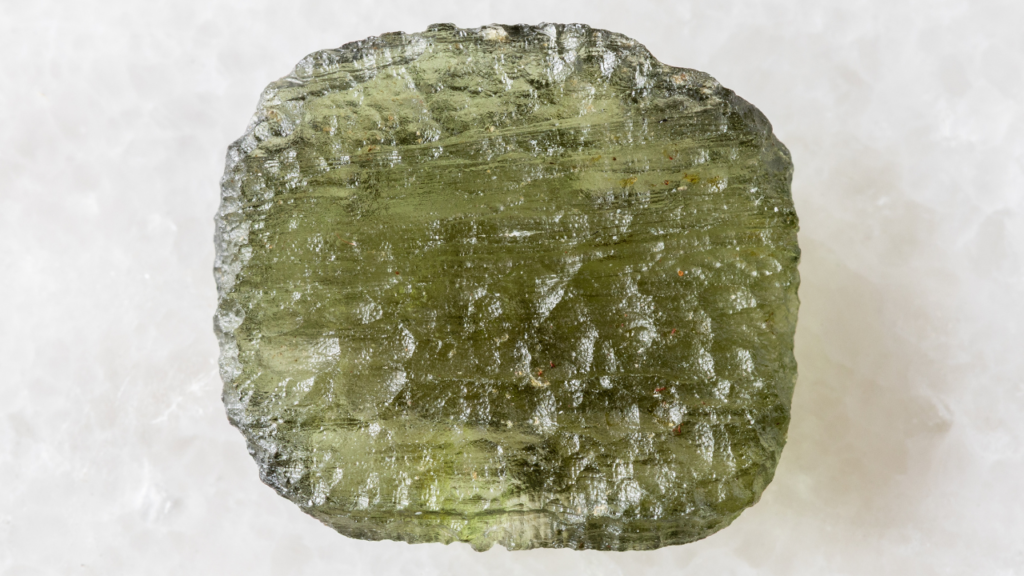
Moldavite has a refractive index of approximately 1.48–1.50, which describes how strongly it bends light as it passes through the material. This relatively low refractive index gives polished moldavite a subtle, glass-like surface reflection rather than a highly brilliant appearance.
Inspired by the remarkable beauty of moldavite, discover the Gemstone Fusion Wall Art Collection, a curated set of three artistic pieces designed to capture the unique colors and character of this extraordinary gemstone.

📌 Moldavite: Summary
- Rare natural glass formed by a meteorite impact about 15 million years ago.
- Belongs to the tektite group.
- Found mainly in the Czech Republic, especially Bohemia and Moravia.
- Named after the Moldau (Vltava) River.
- Known for its green color, swirls, and bubbles.
- May contain distinctive lechatelierite inclusions.
- Has a hardness of 5 on the Mohs scale.
- Refractive index: 1.48–1.50.
- Main sources are Bohemia, Moravia, Austria, and Germany.
- Highly valued by collectors and gem enthusiasts.