
JAMES MONROE
The Fifth President of the United States
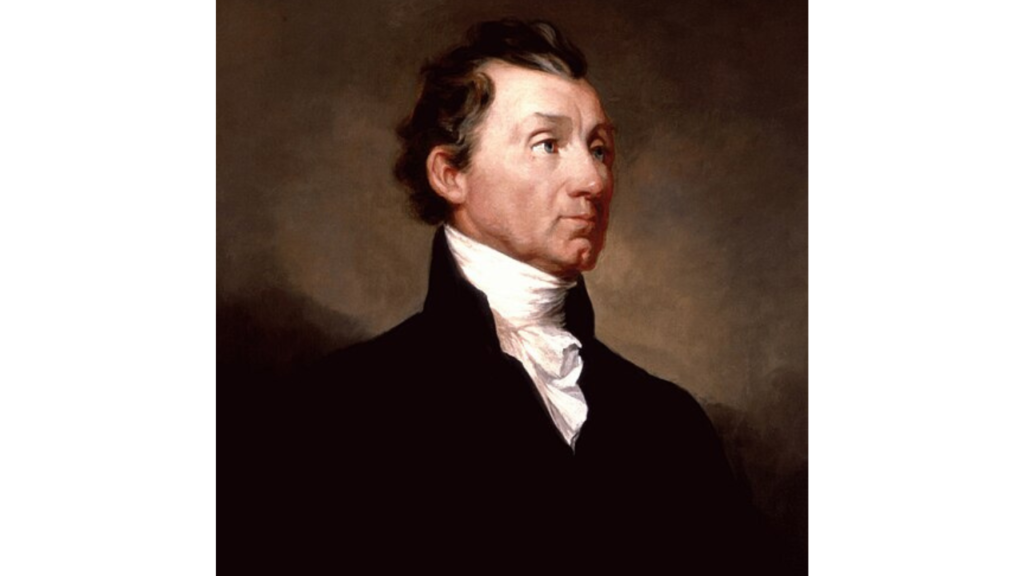
James Monroe was the fifth president of the United States, serving two terms from 1817 to 1825. He was also the last of the Founding Fathers to become president.
1. Early Life and Education
Born on April 28, 1758, in Westmoreland County in the Colony of Virginia, James Monroe was the oldest of five siblings. His father earned a living as a craftsman, while his mother came from a wealthy family of Welsh descent. Monroe entered Campbelltown Academy at eleven and later continued his studies at the College of William & Mary.
His education was interrupted by the demands of farm life, as he was expected to contribute his labor. In 1772, his mother passed away, and his father died shortly afterward, leaving sixteen-year-old Monroe as the oldest son responsible for the family. Although he received an inheritance from his parents, Monroe had to leave his studies to care for his younger brothers. His maternal uncle, Joseph Jones, stepped in as a guardian and became a lasting influence during Monroe’s youth.
2. His First Battles in the Revolution
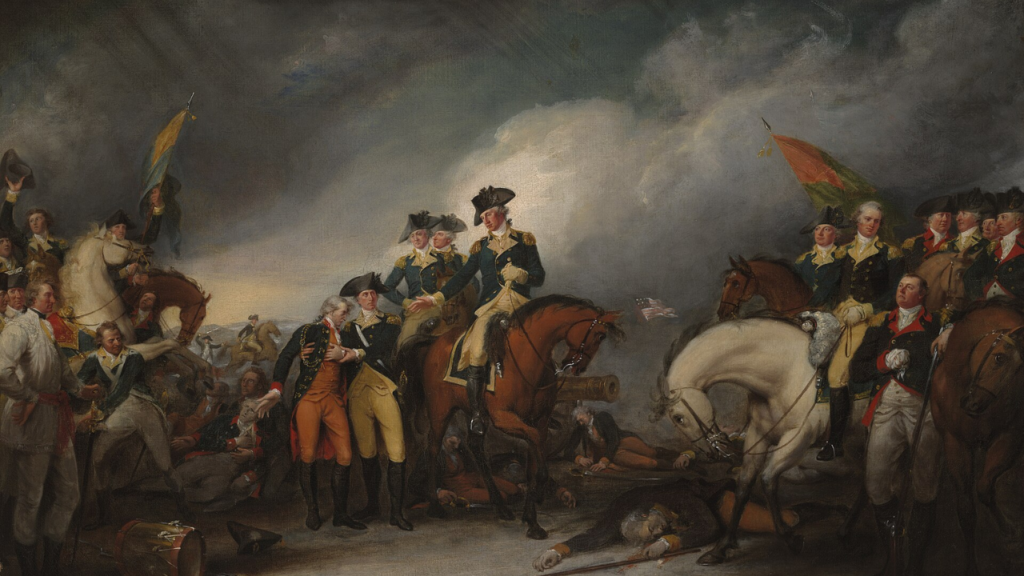
In 1776, Monroe chose military service over continuing his studies and received a lieutenant’s commission in the 3rd Virginia Regiment. After completing his military training, he joined approximately 700 Virginia infantrymen sent to the northern theater of the American Revolution. The regiment became involved in the difficult Continental Army retreat across the Delaware River after the British capture of Fort Washington. In December, Monroe was among the American troops who crossed the river for the attack on the Hessian garrison at Trenton. During the successful assault, he suffered a severe wound that nearly cost him his life. His actions attracted the attention of General George Washington, who recognized his bravery and promoted him to the rank of captain.
3. From the Battlefield to Politics
After recovering from his wounds, Monroe returned to the army. At the Battle of Brandywine, he became close friends with the Marquis de Lafayette, a friendship that lasted for many years. Monroe later spent the winter of 1777–78 at Valley Forge and was promoted to major. After serving in the Battle of Monmouth, he returned to Virginia, where he received a commission as a lieutenant colonel. However, difficulties recruiting soldiers prevented him from taking command. He then returned to the College of William & Mary to study law and later continued his legal studies under Thomas Jefferson, who encouraged him to pursue a political career.
4. Military Leadership in Virginia
As the British increasingly focused their military operations on the Southern colonies, the Virginia government moved its capital to Richmond, and Monroe moved there with Thomas Jefferson. Jefferson appointed Monroe as a military commissioner, responsible for maintaining communication with the Southern Continental Army and the Virginia Militia. By the end of 1780, Monroe had been promoted to colonel and received command of a regiment for the first time.
5. From Law to Politics
After the Revolutionary War, Monroe resumed studying law under Thomas Jefferson. In 1782, he was elected to the Virginia House of Delegates, and in 1783, he entered the Congress of the Confederation. During his time in Congress, Monroe became an advocate for western expansion and played an important role in the passage of the Northwest Ordinance, which established the Northwest Territory. Jefferson continued to mentor Monroe and introduced him to James Madison, who became another important political ally.
6. Minister to France
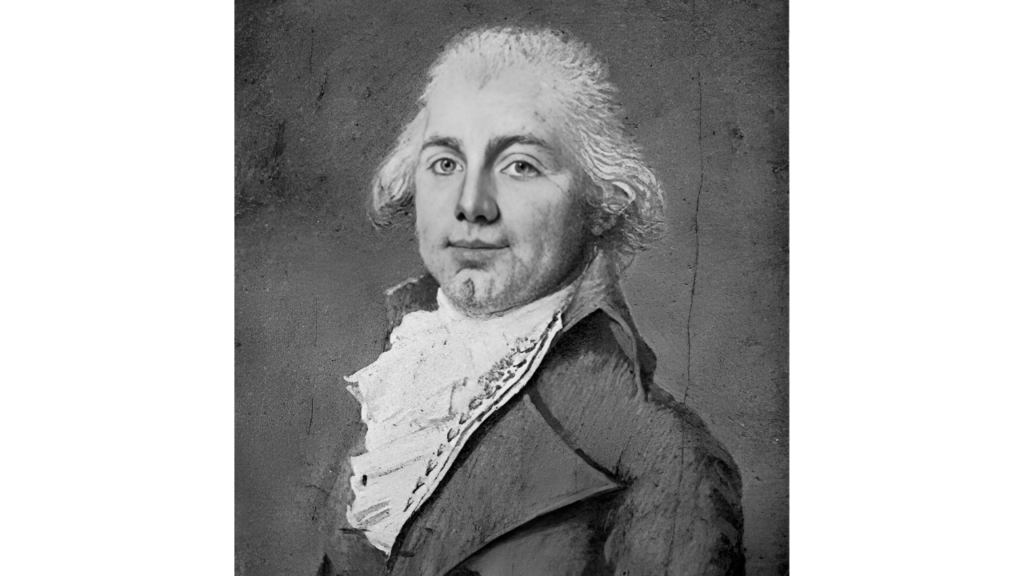
In 1794, President George Washington appointed James Monroe as the U.S. minister to France. During his diplomatic mission, Monroe helped secure the release of American prisoners and worked to advance U.S. navigation rights on the Mississippi River. His efforts contributed to the 1795 Pinckney’s Treaty with Spain, which gave the United States access to the port of New Orleans. In 1796, Monroe was recalled from France and returned home to Charlottesville, Virginia, where he resumed his work as a lawyer and farmer.
7. Governor of Virginia
In 1799, James Monroe was elected Governor of Virginia and served for three years. During his time as governor, he supported improvements in education and transportation, promoted better training for the state militia, and worked with the legislature on reforms, including the creation of the state’s first penitentiary.
8. The Louisiana Purchase
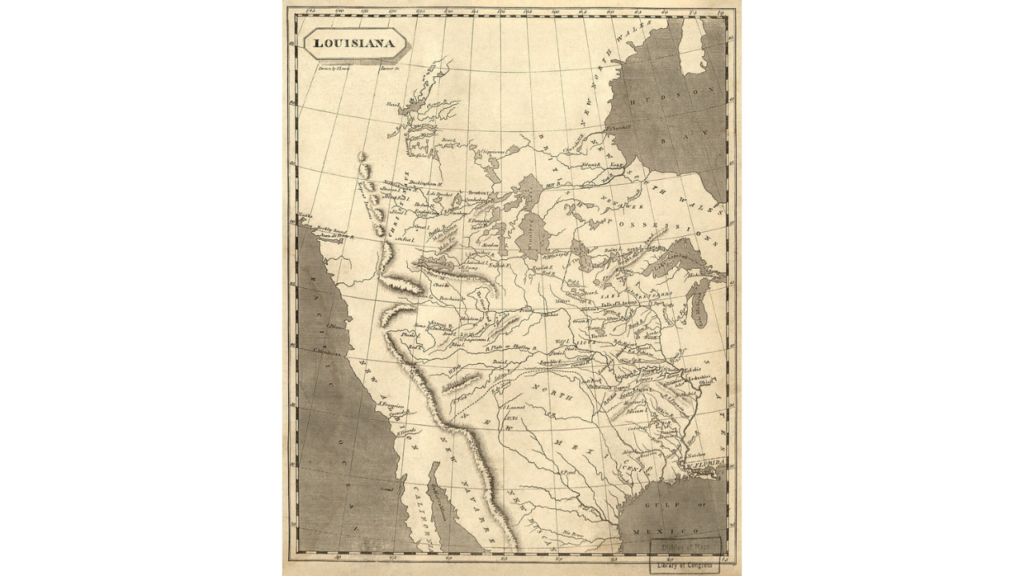
In 1803, Monroe was sent to France to assist in negotiations for the purchase of New Orleans and surrounding territory. Instead, he and American diplomat Robert Livingston negotiated the purchase of the entire Louisiana Territory from France for $15 million. The Louisiana Purchase doubled the size of the United States and became one of the most important territorial acquisitions in American history.
9. The Monroe–Pinkney Treaty
Later that year, Monroe was appointed ambassador to Great Britain. At the time, tensions were growing between the United States and Britain over trade restrictions and Britain’s practice of impressment, which involved taking American sailors and forcing them into the British Navy. In 1806, Monroe and American diplomat William Pinkney negotiated the Monroe–Pinkney Treaty, which aimed to improve trade relations and address some of these disputes. However, the treaty did not adequately resolve the issue of impressment, so President Jefferson refused to submit it to the Senate for ratification.
9. The War of 1812
In 1811, Monroe returned to the Virginia House of Delegates and briefly served as governor before President James Madison appointed him Secretary of State. Monroe worked to resolve growing tensions with Britain, but negotiations failed, and the United States declared war on Britain in 1812, beginning the War of 1812.
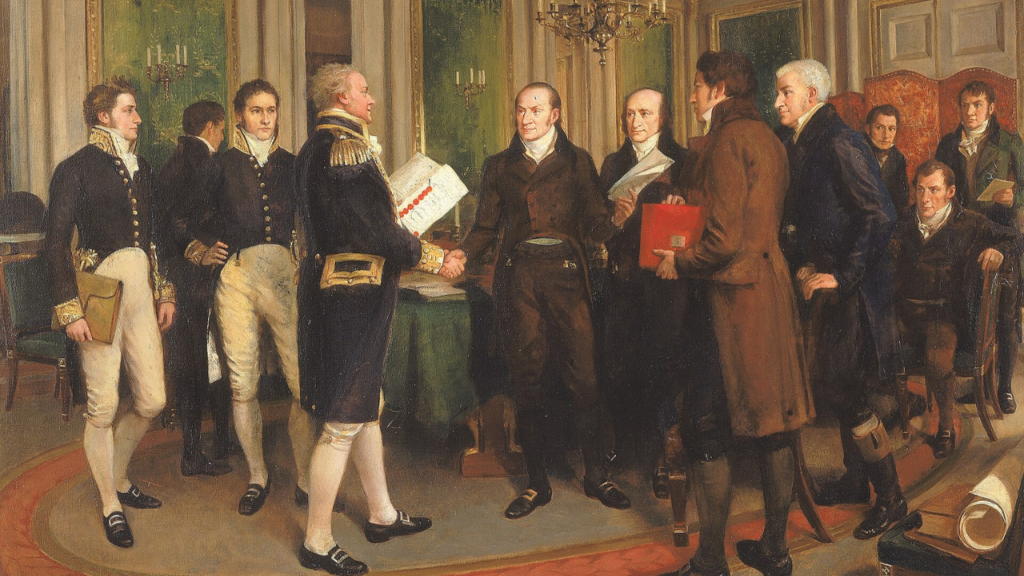
During the war, Monroe took an active role in directing the American war effort. In 1814, after British forces attacked Washington, D.C., he also served as Secretary of War while remaining Secretary of State. He helped prepare defenses, warned President Madison of the approaching British attack, and ordered General Andrew Jackson (7th U.S. President) to defend New Orleans. The war ended in 1815 with the Treaty of Ghent. Monroe emerged from the war as a respected national leader and a strong candidate for the presidency.
10. Monroe’s Presidency – The Era of Good Feelings
On March 4, 1817, James Monroe became the fifth President of the United States, serving from 1817 to 1825. His presidency began during a period of peace and growing economic stability that became known as the “Era of Good Feelings.” He appointed John Quincy Adams as Secretary of State, who would later become the sixth President of the United States and Monroe’s successor.
11. The Acquisition of Florida
During Monroe’s presidency, Spain was struggling to control Florida. The territory had become a source of conflict because of attacks by the Native American people Seminoles, who had lived in Florida since the 18th century, and the presence of escaped slaves who had found refuge there. In 1818, Monroe sent General Andrew Jackson into Spanish Florida to stop the attacks and protect American settlements. Jackson’s forces fought the Seminoles, destroyed several of their towns, and captured Pensacola, the main Spanish settlement in Florida. This gave the United States effective control of much of the territory.
12. The Adams–Onís Treaty and Florida
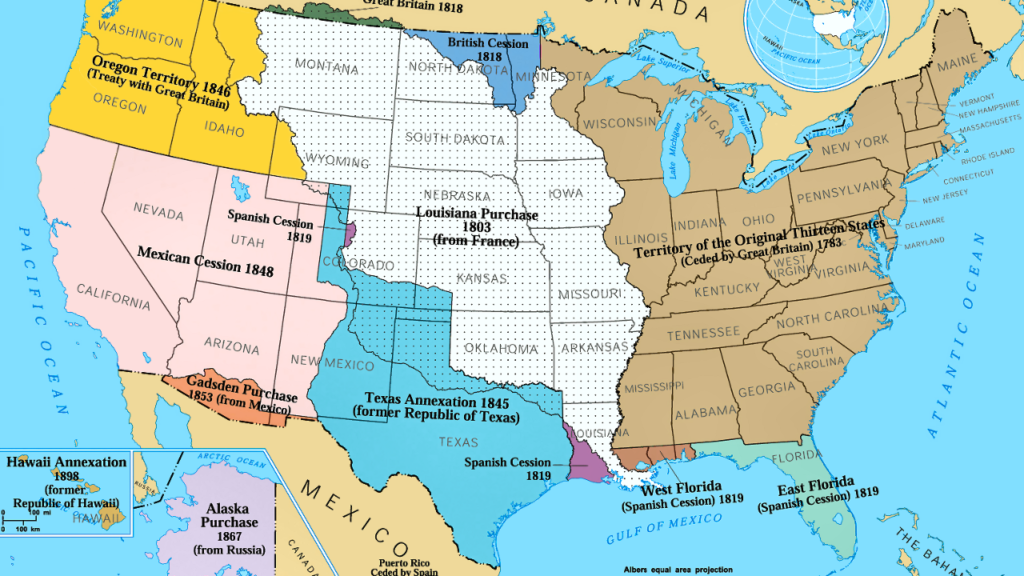
The United States then began negotiations with Spain. On February 22, 1819, the two countries signed the Adams–Onís Treaty. Under the treaty, Spain ceded Florida to the United States, while the United States agreed to settle American claims against Spain of up to $5 million. The treaty also established a new boundary between the United States and Spanish territories in North America.
13. The Monroe Doctrine
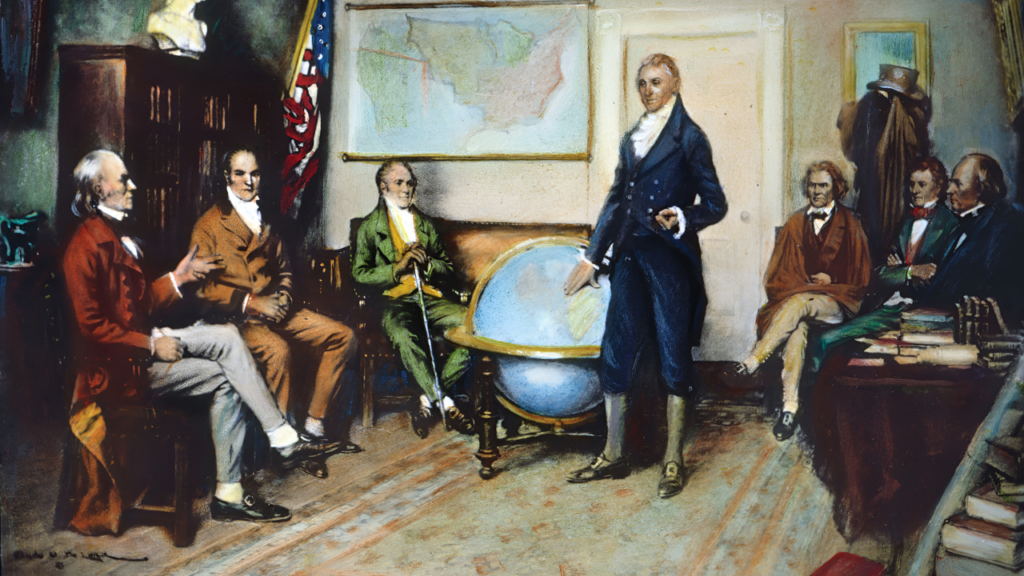
In 1823, Monroe became concerned that European powers might try to regain control of the newly independent countries in the Western Hemisphere or establish new colonies there. With the support of Secretary of State John Quincy Adams, he announced in his annual message to Congress on December 2, 1823, what became known as the Monroe Doctrine.
The Monroe Doctrine stated that European powers should not establish new colonies or interfere in the independent nations of the Americas. In return, the United States would not interfere in existing European colonies or European affairs. This became one of the most important foreign policy principles of Monroe’s presidency.
14. The Panic of 1819
In 1819, the United States faced a major economic crisis known as the Panic of 1819. Falling agricultural prices, declining trade, and problems in banking and land speculation caused many businesses to fail and left many people unemployed or unable to repay their debts. The crisis led to widespread bankruptcies and foreclosures. Monroe had limited power to respond because banks were largely regulated by the states. His administration reduced government spending, especially on defense, while the economy gradually recovered in the following years.
15. Death and Legacy
James Monroe passed away on July 4, 1831, in New York City, at the age of 73. His leadership helped shape the growing nation and define its role in the Western Hemisphere. Nearly two centuries later, his name remains closely associated with a principle that shaped American foreign policy for generations.
Inspired by the leaders who shaped American history, discover the U.S. Presidents Wall Art Collection, a curated collection of artistic portraits to collect, display, and enjoy as your own timeless gallery of American history.

📌 James Monroe: Summary
- Fifth President of the United States, serving from 1817 to 1825
- Last of the Founding Fathers to become president
- Born in 1758 in Westmoreland County, Virginia
- Left college at age 16 to care for his younger siblings after his parents died
- Joined the Continental Army in 1776 and fought in the American Revolution
- Wounded at the Battle of Trenton and later promoted to captain by George Washington
- Served at Brandywine, Valley Forge, and Monmouth and became a close friend of Marquis de Lafayette
- Studied law and became a close friend and political ally of Thomas Jefferson
- Elected to the Virginia House of Delegates in 1782 and entered the Congress of the Confederation in 1783
- Supported western expansion and helped advance the Northwest Ordinance
- Served as U.S. minister to France and helped secure the Pinckney’s Treaty with Spain
- Served as Governor of Virginia and supported reforms in education, transportation, and the state militia
- Helped negotiate the Louisiana Purchase in 1803, which doubled the size of the United States
- Served as Secretary of State and later Secretary of War under President James Madison
- Helped direct the American war effort during the War of 1812
- Became president in 1817, beginning the Era of Good Feelings
- His administration oversaw the acquisition of Florida from Spain through the Adams–Onís Treaty
- Announced the Monroe Doctrine in 1823, warning European powers against new colonization or interference in the Americas
- Died in 1831 at the age of 73 in New York City