
JADE
Two Stones, One Legendary Name
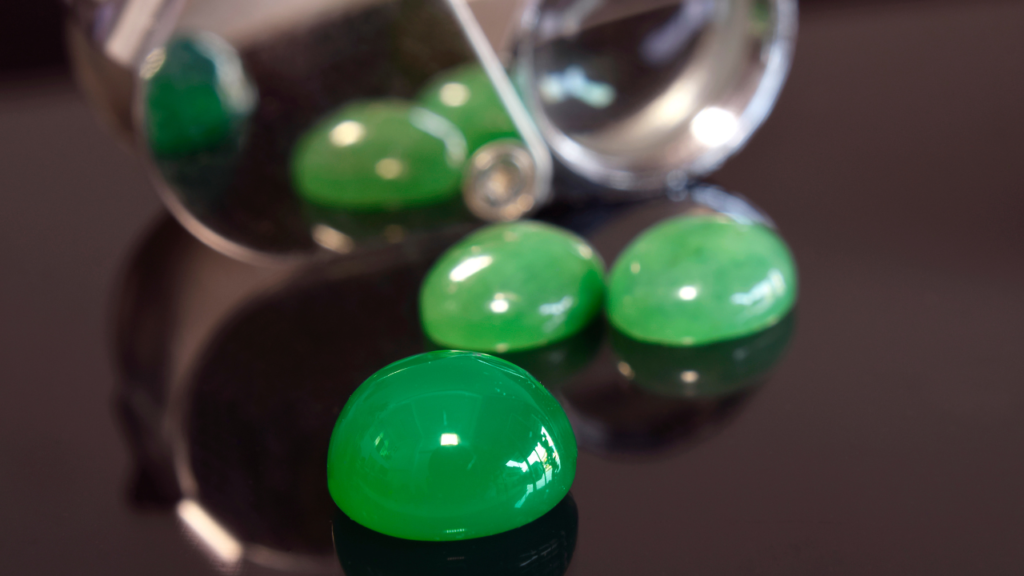
Jade is one of the world’s most treasured gemstones, admired for thousands of years for its beauty and durability. It also holds deep cultural significance and has long been associated with wisdom, harmony, and protection.
1. What Is Jade
In 1863, the French mineralogist Alexis Damour discovered that the term “jade” actually refers to two distinct minerals. These two minerals are nephrite and jadeite, which today are both grouped under the general name “jade.” Although they share a similar appearance, the two stones differ in their chemical composition. This distinction marked a major turning point in the scientific understanding of jade.
2. What Color Is Jade
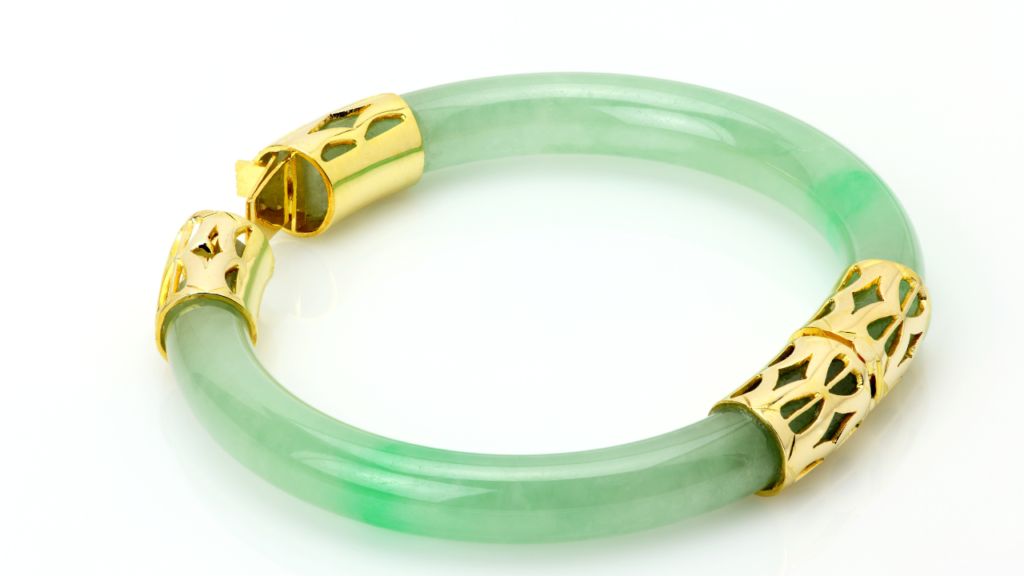
Jadeite, composed of sodium and aluminum silicate, is considered the more precious of the two minerals. Nephrite, on the other hand, is a calcium and magnesium silicate. The highest-quality jadeite is almost transparent and displays a vivid emerald-green color known as “Imperial Jade.” Both jadeite and nephrite can appear in white or colorless forms, but trace elements such as iron, chromium, and manganese can create shades of red, green, violet, or gray. Pale green remains the most commonly seen color in nature.
3. The Origins of the Name "Jade"
The word “jade” comes from the Spanish expression piedra de ijada, meaning “stone of the pain in the side.” Early Spanish explorers gave it this name after observing Indigenous people holding pieces of the stone to their sides. They believed the mineral could ease discomfort related to kidney stones. This association with healing helped cement jade’s early reputation as a protective and beneficial stone. The name has remained in use across cultures for centuries.
4. Jade in Ancient Cultures
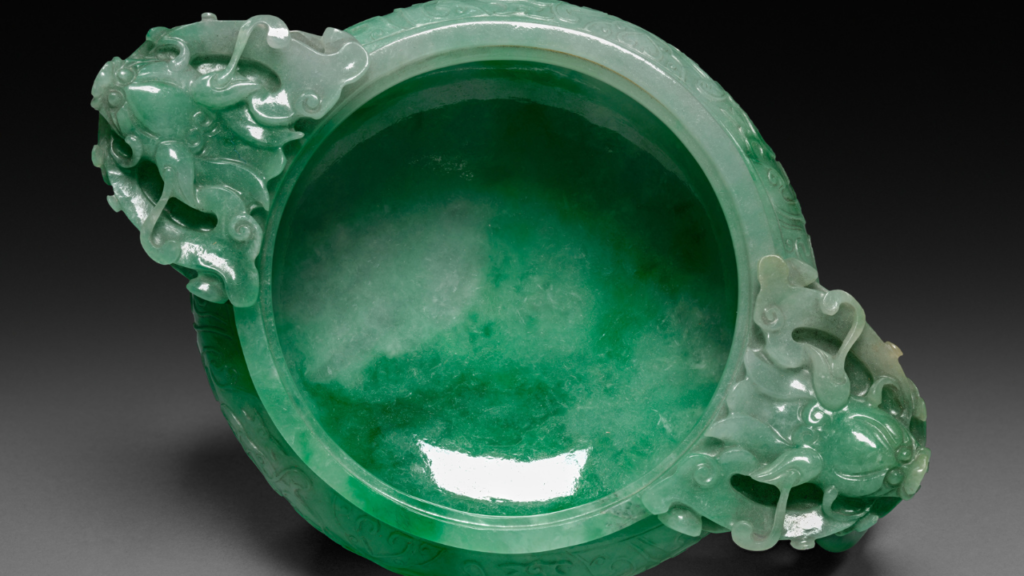
During the Stone Age, jade was widely used to craft axe heads, knives, and various types of weaponry. Its toughness made it essential for early toolmaking. Nephrite jade held a particularly high status in ancient China, where it was regarded as the most precious of all stones. It was also deeply valued in Maori culture in New Zealand and used extensively by the Maya and other early civilizations as far back as 3000 BC. Across these cultures, jade symbolized strength, purity, and spiritual significance.
5. Geographic Sources
Myanmar is currently estimated to supply around 70% of the world’s highest-quality jadeite. Jade deposits are also found in New Zealand, Canada, Taiwan, Guyana, Surinam, parts of southern Europe, Russia, and China. One of the most remarkable examples of jade craftsmanship is the massive Buddha statue housed in the Jade Buddha Palace in China. Carved from a single piece of jade, the statue weighs 260.76 tons, stands 7.95 meters high, and displays seven distinct natural colors. It remains one of the world’s largest and most admired jade masterpieces.
6. Hardness & Anniversary
Jadeite ranks between 6 and 7 on the Mohs hardness scale, while nephrite measures slightly lower at 6 to 6.5. It is recognized as the official gemstone for the 12th wedding anniversary.
7. How to Clean Jade
To care for jade properly, the safest method is to use a soft cloth dipped in mild soapy water and gently wipe the surface. This helps preserve the stone’s natural shine and beauty without causing damage.
8. Refractive index
Jade has a refractive index of 1.666–1.680 for jadeite and 1.606–1.632 for nephrite. These values influence how light travels through the stone, contributing to jade’s characteristic appearance and luster.
Inspired by the remarkable beauty of jade, discover the Gemstone Fusion Wall Art Collection, a curated set of three artistic pieces designed to capture the unique colors and character of this extraordinary gemstone.

📌 Jade: Summary
- Two minerals: jadeite and nephrite
- Colors: green, white, red, violet, gray, pale green
- Imperial Jade is vivid emerald-green and highly prized
- Name means “stone of the side” in Spanish
- Used in China, Maori culture, Maya civilization
- Myanmar produces most high-quality jadeite
- Found also in Canada, New Zealand, Russia, China
- Hardness: 6–7 (jadeite), 6–6.5 (nephrite)