
BAROQUE MUSIC
Part 1 (c. 1600–1750)
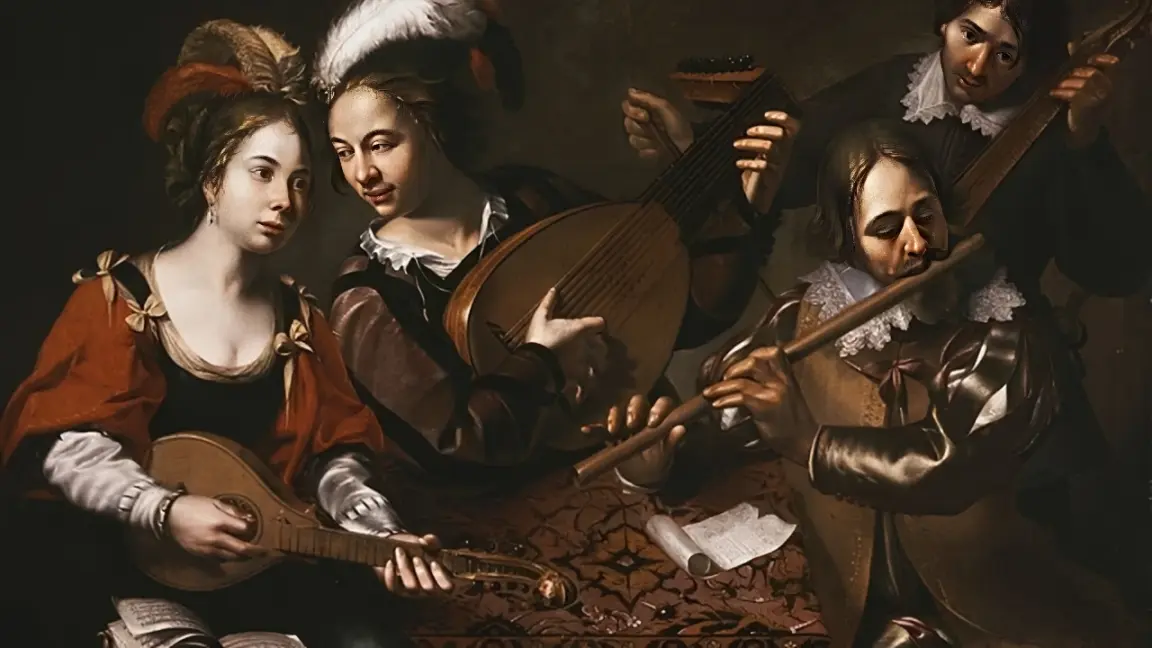
1. Canon in D (J. Pachelbel)
Pachelbel’s Canon, also known as Canon in D, is a famous piece of the Baroque era composed by German musician Johann Pachelbel (1653–1706). It is believed to have been written between 1680 and 1706. The piece gained worldwide popularity after a 1968 arrangement by the Jean-François Paillard chamber orchestra. Its simple and elegant chord progression has made it a favorite for weddings, films, and popular music.
2. Toccata and Fugue in D Minor (J.S. Bach)
The Toccata and Fugue in D Minor is a famous Baroque composition by German composer Johann Sebastian Bach (1685–1750) and one of the most recognizable works in the organ repertoire. Its exact date of composition is unknown, but it is believed to have been written in the early 18th century. The piece gained worldwide popularity in the 20th century, especially after being featured in Disney’s Fantasia (1940). Known for its dramatic and powerful opening, it remains one of Bach’s most iconic works.
3. Spring -Four Seasons (Vivaldi)
The Four Seasons is a set of four violin concertos by Italian composer Antonio Vivaldi (1678–1741), each representing a season of the year. He wrote them around 1718–1723 while working in Mantua, and they were published in
1725 in Amsterdam.
4. Water Music (G.F. Handel)
Water Music is a famous set of orchestral suites by German-British Baroque composer George Frideric Handel (1685–1759). It was written to be performed outdoors on the River Thames for King George I and his guests. The first performance took place on 17 July 1717, when the king and his party traveled by royal barge along the river. A separate barge carried musicians performing Handel’s music, and the work was reportedly so
well received that the king requested it be played several times during
the journey. Today, Water Music is still celebrated for its joyful and festive character, making it one of the most popular works of the Baroque era.
5. Air on the G String (J.S. Bach)
Air on the G String is a famous arrangement of a movement from Johann Sebastian Bach (1685–1750)’s Orchestral Suite No. 3 in D major (BWV 1068). The version known today was arranged in 1871 by violinist August Wilhelmj, who transposed the melody so it could be played entirely on the violin’s G string, giving the piece its name. Originally composed around 1730 in Leipzig, Bach’s work was part of a larger orchestral suite. Wilhelmj’s Romantic-era arrangement softened the original Baroque character and became highly popular in the late 19th century. Today, it remains one of Bach’s most recognizable and beloved pieces.
6. Courante (Jean-Baptiste Lully)
Jean-Baptiste Lully was an Italian-French composer, dancer, and musician, and a leading figure in French Baroque music. He is best known for his operas and spent most of his life working at the court of King Louis XIV. In 1661, he officially became a French citizen.
His courantes are lively Baroque dances. They are elegant and graceful, showing the style and manners of the French royal court.
7. Sonata In D Minor K1 (D. Scarlatti)
Domenico Scarlatti (1685–1757) was an Italian Baroque composer whose music also helped shape the early Classical style. He is best known for his extraordinary 555 keyboard sonatas and spent much of his life in the service of the Portuguese and Spanish royal families. Sonata K. 1 in D minor was published in 1738 as the opening piece of his collection Essercizi per gravicembalo.
Test your knowledge and collect: 🪙 & ⭐