
ANDREW JACKSON
The Seventh President of the United States
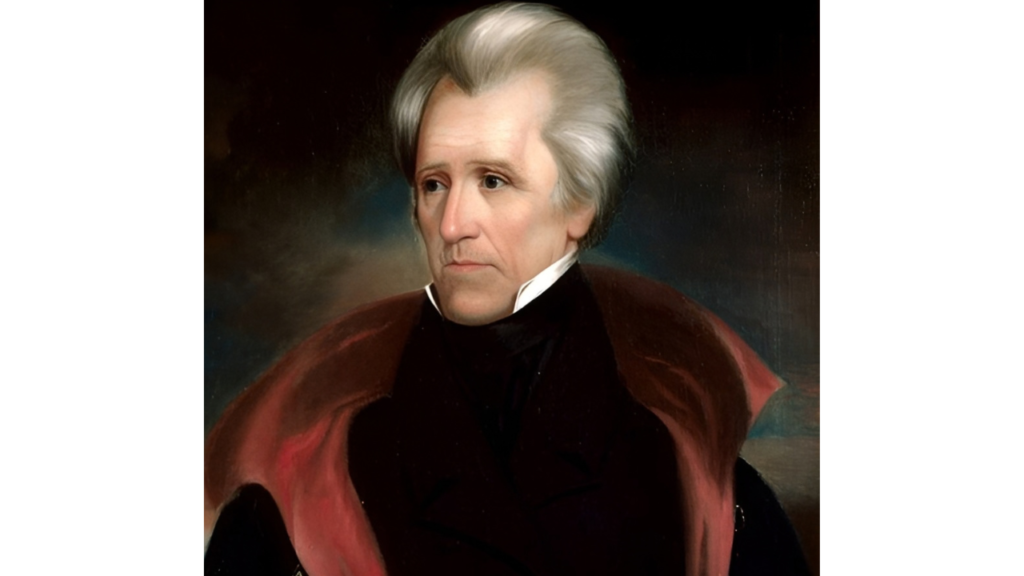
Andrew Jackson was the seventh president of the United States, serving from 1829 to 1837. Before becoming president, he gained national recognition as a military general and served in both the U.S. House of Representatives and the Senate. His political ideas helped shape a movement known as Jacksonian democracy.
1. Early Life and Education
Jackson was born on March 15, 1767, in the Waxhaws region, an area along the border of North and South Carolina. His parents were Scots-Irish immigrants who came to America from Ireland, in 1765, bringing their two sons with them. Jackson was born just three weeks before his father died
As a boy, Jackson received private lessons from a local clergyman, as his mother hoped he would become a minister. However, his strong will and quick temper made him unsuited to a life in the ministry.
2. Capture and Imprisonment
During the American Revolutionary War, Jackson and his two older brothers supported the American fight against British rule. Both of his brothers died during the war.
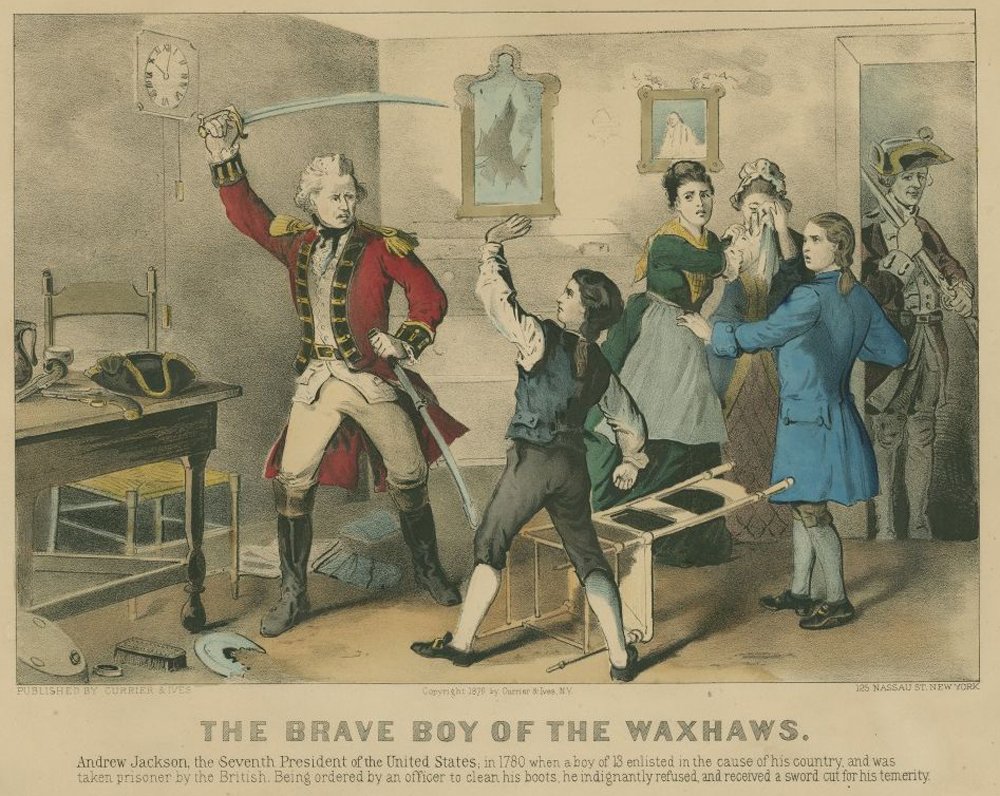
In 1781, when a British officer ordered him to clean his boots, Jackson refused. The officer struck him with a sword, leaving scars on his head and hand. Jackson was taken prisoner and suffered from malnutrition and smallpox while in captivity.
After his release in a prisoner exchange, his mother, Elizabeth, cared for him as he recovered. She later went to Charleston, South Carolina, to help American prisoners held aboard British ships. While caring for them, she contracted cholera and died shortly afterward.
By the age of fourteen, Jackson had lost his father, both brothers, and his mother. These tragic experiences during the Revolutionary War left a lasting mark on his life and strengthened his hostility toward the values he associated with Britain, particularly aristocracy and political privilege.
3. Early Career
After the Revolutionary War, Jackson worked as a saddler, briefly continued his education, and taught children to read and write. In 1784, he left the Waxhaws region and moved to Salisbury, North Carolina, to study law. After completing his legal training, he was admitted to the North Carolina bar in September 1787.
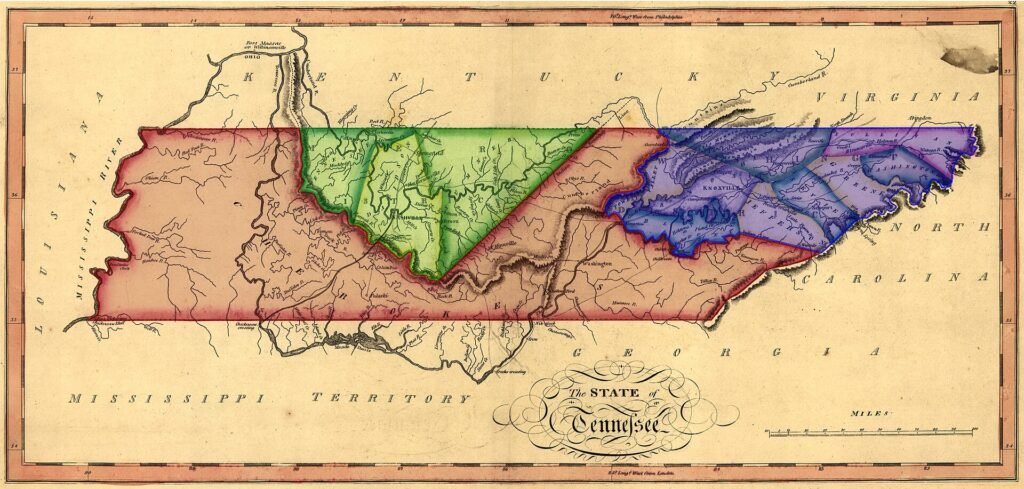
Soon afterward, Jackson secured a position as a prosecuting attorney in the western part of North Carolina, an area that would later become Tennessee. He settled in Nashville in 1788, where he built his legal career and gained influence in the growing community. He later served as attorney general of the Mero District and as a military judge-advocate.
4. Business and Political Connections
Jackson also became involved in land speculation, partnering with fellow lawyer John Overton. Their business dealt with land claims involving territory taken from Cherokee and Chickasaw lands. Jackson also participated in the slave trade, transporting enslaved people between Nashville and the Natchez District.
5. Early Political and Military Career
In 1796, Jackson participated in Tennessee’s constitutional convention as the state prepared to join the Union. That same year, he was elected to the U.S. House of Representatives as a member of the Democratic-Republican Party. During his time in Congress, he opposed the Jay Treaty, criticized President George Washington’s treatment of political opponents, and supported the use of military force to defend Tennessee’s interests against Native Americans. In 1797, the Tennessee legislature elected Jackson to the U.S. Senate. However, he resigned after only six months. In early 1798, he became a judge on the Tennessee Superior Court. In 1802, Jackson became major general of the Tennessee militia.
6. The Hermitage Plantation
In 1804, Jackson resigned as a judge after suffering major financial losses. His land investments and business ventures had nearly ruined him, forcing him to sell much of his property. He purchased a smaller plantation near Nashville, which he named the Hermitage, and focused on rebuilding his wealth through farming and trade.
Jackson expanded the plantation into a major cotton-producing estate. Like many Southern planters of his time, he relied on enslaved labor. He enslaved nine people in 1804, more than 100 by 1820, and over 150 by the time of his death in 1845. He also authorized severe punishments for enslaved people who resisted or attempted to escape.
His growing wealth in land and enslaved people helped establish Jackson among Tennessee’s most prominent families.
7. Duel with Charles Dickinson
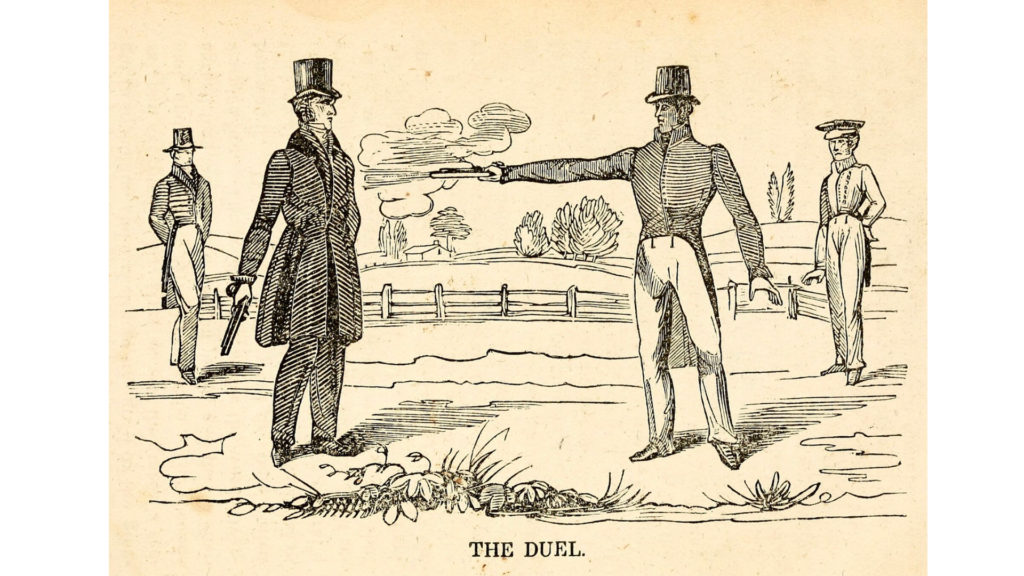
In May 1806, Jackson fought a duel with Charles Dickinson after a dispute over a horse race. Dickinson fired first, hitting Jackson in the chest, but Jackson returned fire and killed him. The incident damaged Jackson’s reputation.
8. The Nickname “Old Hickory”
When the War of 1812 began, Jackson offered to raise volunteers for military service. In January 1813, he assembled more than 2,000 men and received orders to march toward New Orleans. However, the expedition was canceled, and Jackson was instructed to disband his troops.
Rather than abandon his men, Jackson led them on a difficult journey back to Tennessee. His toughness and determination earned him the nickname “Old Hickory,” which became closely associated with his public image.
9.xxx
xxxx
9. xxx
xxxx
10. xxx
xxx
11. xxx
xxxx
12. xxx
xxx
13. xxxx
xxx
14. xxx
xxx
15. xxx
xxx
Inspired by the leaders who shaped American history, discover the U.S. Presidents Wall Art Collection, a curated collection of artistic portraits to collect, display, and enjoy as your own timeless gallery of American history.

📌 James Monroe: Summary
- Fifth President of the United States, serving from 1817 to 1825
- Last of the Founding Fathers to become president
- Born in 1758 in Westmoreland County, Virginia
- Left college at age 16 to care for his younger siblings after his parents died
- Joined the Continental Army in 1776 and fought in the American Revolution
- Wounded at the Battle of Trenton and later promoted to captain by George Washington
- Served at Brandywine, Valley Forge, and Monmouth and became a close friend of Marquis de Lafayette
- Studied law and became a close friend and political ally of Thomas Jefferson
- Elected to the Virginia House of Delegates in 1782 and entered the Congress of the Confederation in 1783
- Supported western expansion and helped advance the Northwest Ordinance
- Served as U.S. minister to France and helped secure the Pinckney’s Treaty with Spain
- Served as Governor of Virginia and supported reforms in education, transportation, and the state militia
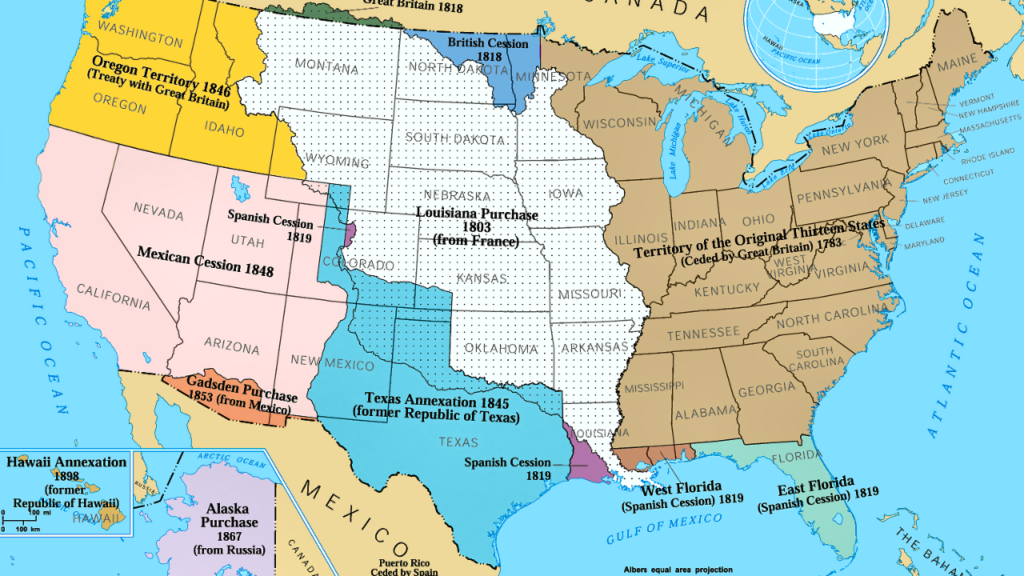
- Helped negotiate the Louisiana Purchase in 1803, which doubled the size of the United States
- Served as Secretary of State and later Secretary of War under President James Madison
- Helped direct the American war effort during the War of 1812
- Became president in 1817, beginning the Era of Good Feelings
- His administration oversaw the acquisition of Florida from Spain through the Adams–Onís Treaty
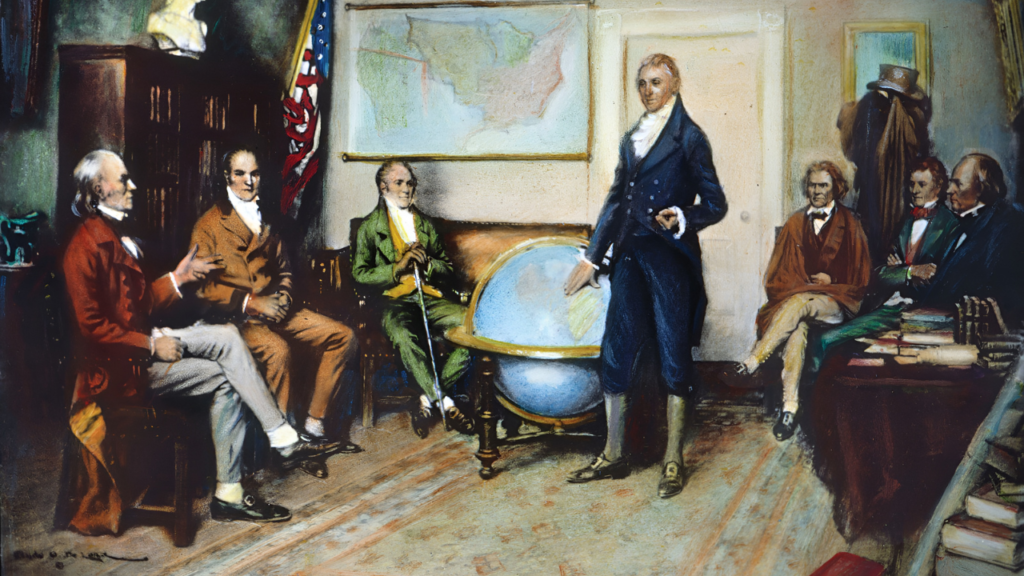
- Announced the Monroe Doctrine in 1823, warning European powers against new colonization or interference in the Americas
- Died in 1831 at the age of 73 in New York City