Alexandrite
Rare Color-Changing Gemstone Everyone Wants to Know About
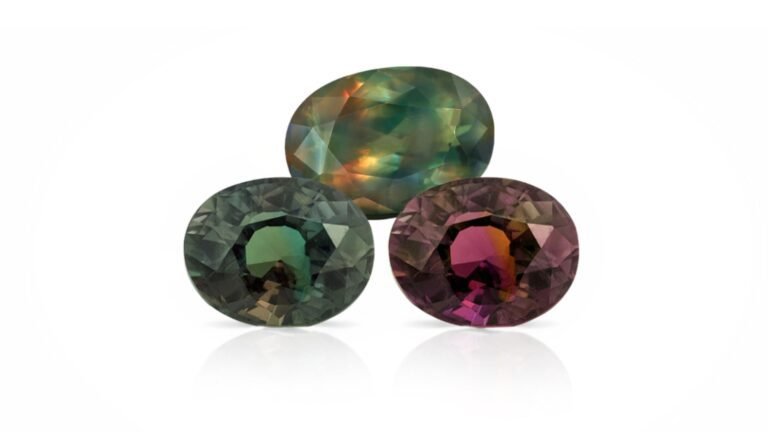
Emerald by Day, Ruby by Night
What Makes Alexandrite Change Its Color
This effect is caused by trace elements in the crystal, mainly chromium, which absorb and reflect light differently depending on the source. The human eye also plays a part, as it is most sensitive to green wavelengths, making the daylight color appear especially vivid. The stronger the contrast between green and red, the more valuable the gemstone becomes. Its dramatic shift in appearance makes alexandrite one of the most captivating and sought-after gems among collectors.
From Russian Mountains to the World
Alexandrite was first discovered in 1830 in Russia’s Ural Mountains, on the birthday of Prince Alexander II, after whom it was named. The spectacular Russian deposits did not last forever. Almost all of the country’s alexandrite was mined during the 19th century. These early finds quickly became prized by Russian royalty and aristocracy, turning the gem into a national treasure. The rarity of new discoveries in later years only increased its prestige, making Russian alexandrite some of the most coveted in history. Even today, stones from the original Ural mines are regarded as the finest examples of the gem’s dramatic color-changing beauty.
Where Alexandrite is Found Today
Today, new sources of this gem are found in Sri Lanka, Madagascar, Burma, Tanzania, and Brazil. However, the original Russian stones are still considered the most treasured. Gems from these newer locations can display striking color changes, yet many collectors view them as less intense compared to the legendary Ural specimens. For example, Brazilian alexandrite is known for its dramatic shift from green to red, though the hues are sometimes lighter. Sri Lankan stones are admired for their clarity and vivid colors, while African alexandrite can show fine emerald-green tones but usually comes in smaller sizes. These global deposits have increased availability, but none have surpassed the reputation and prestige of Russian alexandrite.
Alexandrite’s Most Common Cuts
Because alexandrite is such a rare gem, it is usually cut into shapes that bring out its best color changes, most often cushion and round cuts. The main goal of cutting is not only to retain weight but to maximize the stone’s famous shift in color and overall brilliance. To achieve this, cutters carefully orient the crystal so that its pleochroism (the ability to show different colors from different angles) is displayed at its best. This process sometimes requires sacrificing perfect symmetry to ensure the most vivid green-to-red transformation is visible. The result is a gemstone whose beauty depends as much on skilled cutting as on the rarity of the material itself.
The Largest Alexandrite
One of the most famous examples of alexandrite is the world’s largest faceted stone, a 66-carat gem from Sri Lanka. This extraordinary specimen is part of the Smithsonian Institution’s National Museum of Natural History in Washington, D.C., where it captivates visitors with its remarkable size and beauty. The collection also features the spectacular 17-carat Whitney Alexandrite from Brazil, celebrated for its vivid color transformation. Together, these gems highlight the rarity, brilliance, and cultural importance of alexandrite as one of the world’s most extraordinary gemstones.
Strength, Birthstone, and Anniversary Gem
Alexandrite is a strong and durable gemstone, scoring 8.5 on the Mohs scale of hardness. This resilience makes it a practical choice for jewelry that can withstand daily wear while maintaining its brilliance. As the birthstone for June, it is prized not only for its enchanting visual appeal but also for the symbolism it carries, representing balance, renewal, and harmony. Alexandrite is further honored as the traditional gift for a 55th wedding anniversary, where its enduring strength reflects the lasting beauty of a lifelong partnership.
The Meanings of Alexandrite
Beyond its beauty, alexandrite is thought to carry special meanings. It is associated with love, good fortune, imagination, creativity, and intuition. Some also say it sharpens focus, enhances concentration, and serves as a bridge between the physical and spiritual worlds.
Keeping Alexandrite Beautiful
To keep alexandrite looking its best, it’s important to clean it the right way. Warm, soapy water is the safest choice for maintaining its shine and protecting it from damage. With proper care, this rare and magical gemstone can keep its beauty for generations.