
CARNELIAN
The Sunset Stone
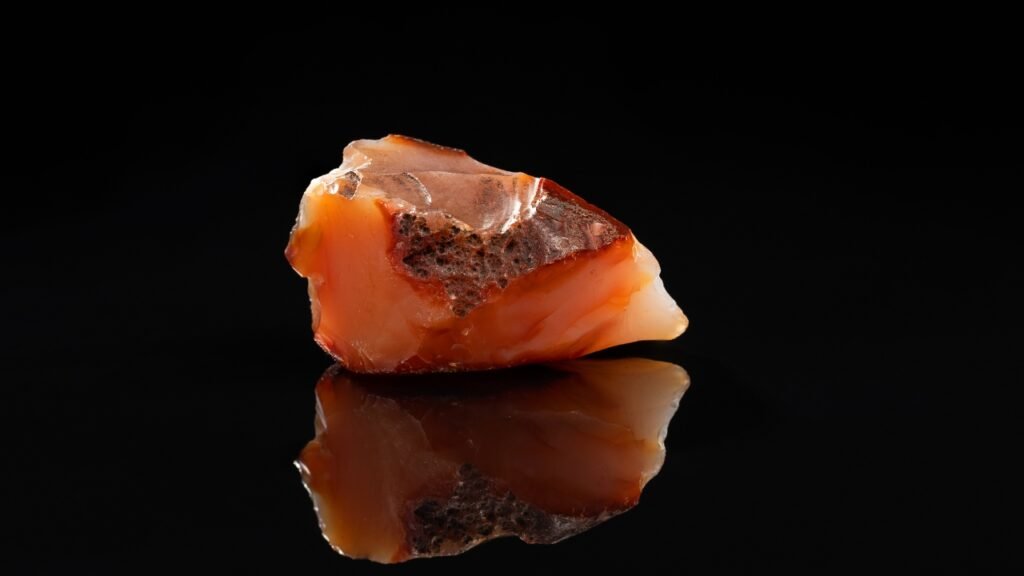
Carnelian has been valued by people for thousands of years and continues to be recognized as one of the world’s most well-known gemstones. Its rich history and widespread use have made it a fascinating subject of study.
1. What Is carnelian?
Carnelian is a variety of the mineral chalcedony, known for its warm, glowing colors that range from yellow-orange to deep reddish-orange and even orange-brown. These vibrant tones come from traces of iron within the stone. Its smooth, glassy luster and fiery appearance make it easily recognizable and highly valued. For centuries, carnelian has been used in jewelry, carvings, and decorative objects due to its beauty and durability.
2. The Origin of the Name
The name carnelian comes from the Latin word carneus, meaning “fleshy,” a reference to its rich red-orange color. Because of this warm hue, the stone has long been associated with life, vitality, and energy.
3. Carnelian Sources
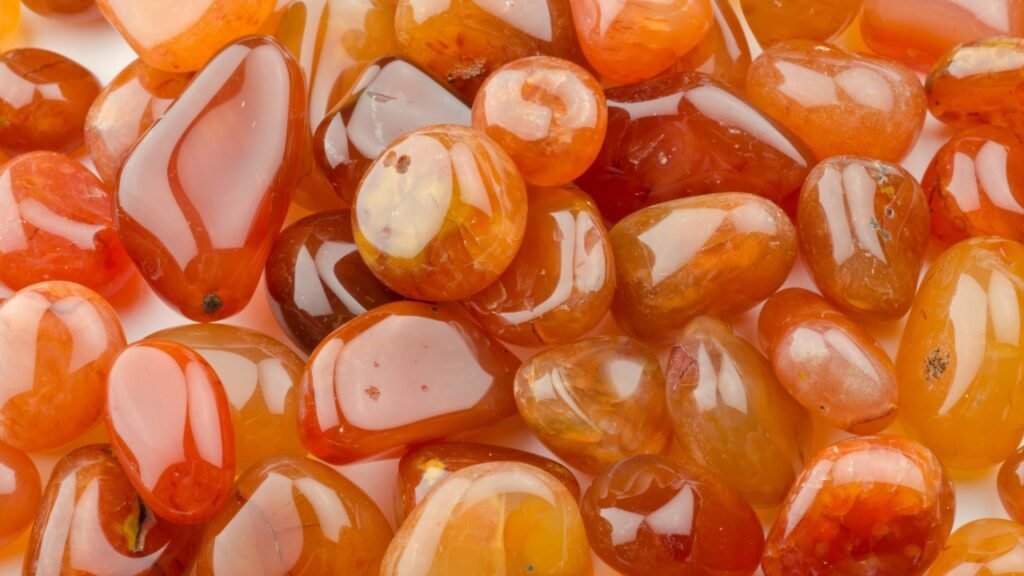
Carnelian is mined in many parts of the world. Today, most commercial carnelian comes from India, though other gem-quality sources are found in Brazil, Egypt, and Uruguay. These regions have produced stones used in jewelry and art for centuries.
4. Carnelian in History
For centuries, it was carved into signet rings, talismans, and decorative objects. The ancient Egyptians even called it the “Sunset Stone,” believing it captured the warmth of the sun and passed its energy to the wearer. Beyond Egypt, carnelian was widely used in Roman, Greek, and Mesopotamian jewelry, often worn as an amulet to protect against misfortune. Historic carnelian pieces discovered in ancient tombs and temples highlight its long-standing cultural significance.
5. Carnelian Hardness
Carnelian ranks 7 on the Mohs scale of hardness, making it suitable for everyday wear in jewelry such as rings and bracelets. As a variety of chalcedony quartz, it is fairly hard and durable, but it can still chip under strong impact and is sensitive to extreme heat, harsh chemicals, and prolonged exposure to sunlight.

6. Safe Cleaning and Storage
The safest method for cleaning carnelian is to use warm, soapy water and gently wipe the stone with a soft cloth. Harsh chemicals and ultrasonic cleaners should be avoided, as they can damage the surface of the gem. After cleaning, the stone should be dried thoroughly and stored separately from harder gemstones to prevent scratches.
7. Refractive index
Carnelian has a refractive index of approximately 1.535–1.539. The refractive index describes how much light bends as it passes through a gemstone. In carnelian, this value contributes to its smooth, waxy to glass-like luster and the warm glow that enhances its rich orange to reddish-brown color.
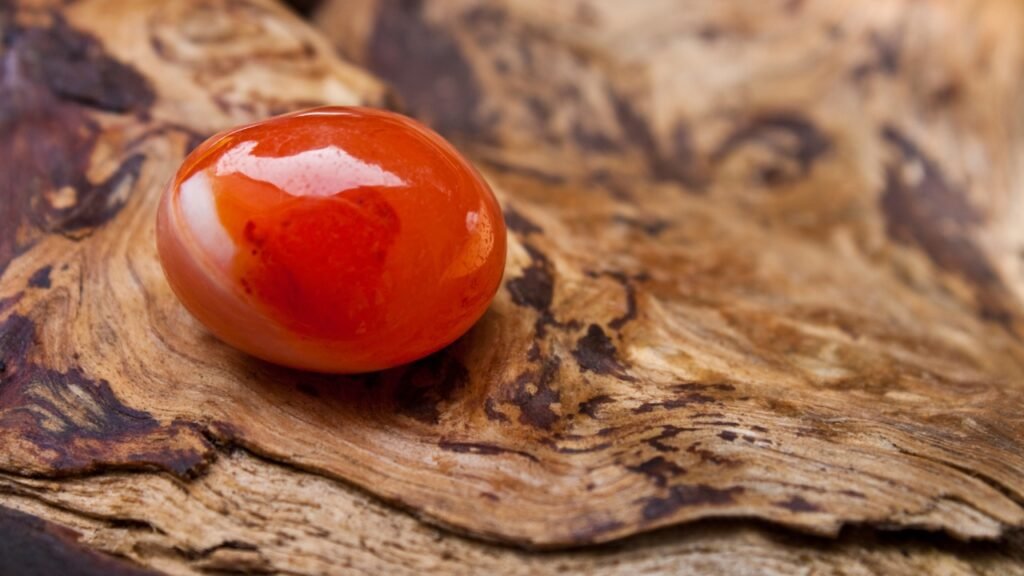
Inspired by the remarkable color of carnelian, discover the Gemstone Fusion Wall Art Collection, a curated set of three artistic pieces designed to capture the unique colors and character of this extraordinary gemstone.

📌 Carnelian: Summary
- Chalcedony gemstone, yellow-orange to reddish-orange
- Color due to iron
- Name means “fleshy” in Latin, reflects rich tones
- Treasured for centuries; used in jewelry, carvings, talismans
- Called “Sunset Stone” by ancient Egyptians
- Symbol of courage, motivation, prosperity, and good luck
- Mainly from India; also Brazil, Egypt, Uruguay
- 7 on the Mohs scale of hardness