
AMMOLITE
From Fossil to Gemstone
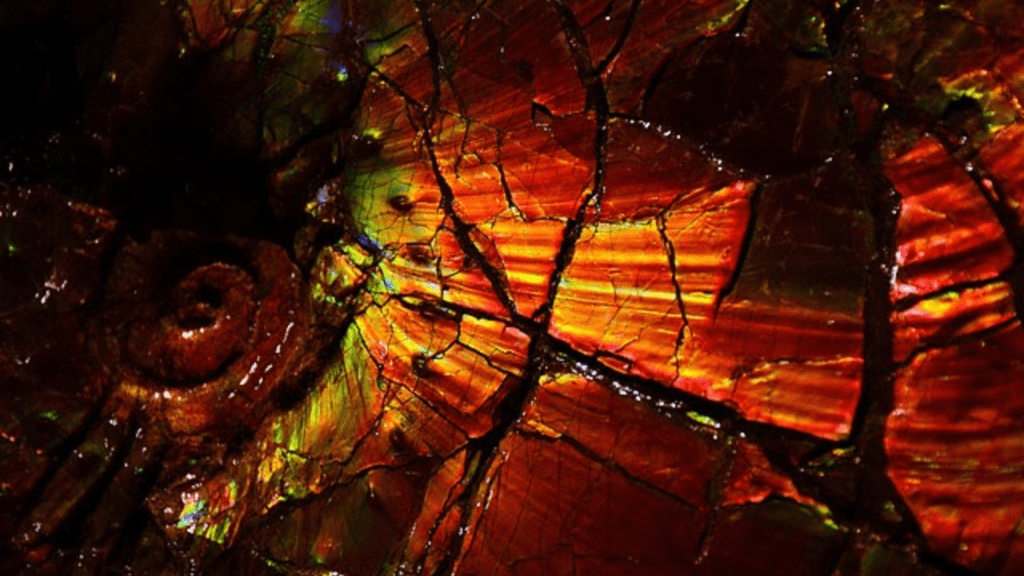
Ammolite is among the rarest gemstones found on Earth, admired for its striking appearance and fascinating history. Its unique origins and remarkable colors make it unlike any other gemstone.
1. What Is Ammolite?
Ammolite is a one of the few organic gemstones in the world, alongside amber and pearl. It was made from the fossilized shells of ammonites.
2. What Is Ammonite?
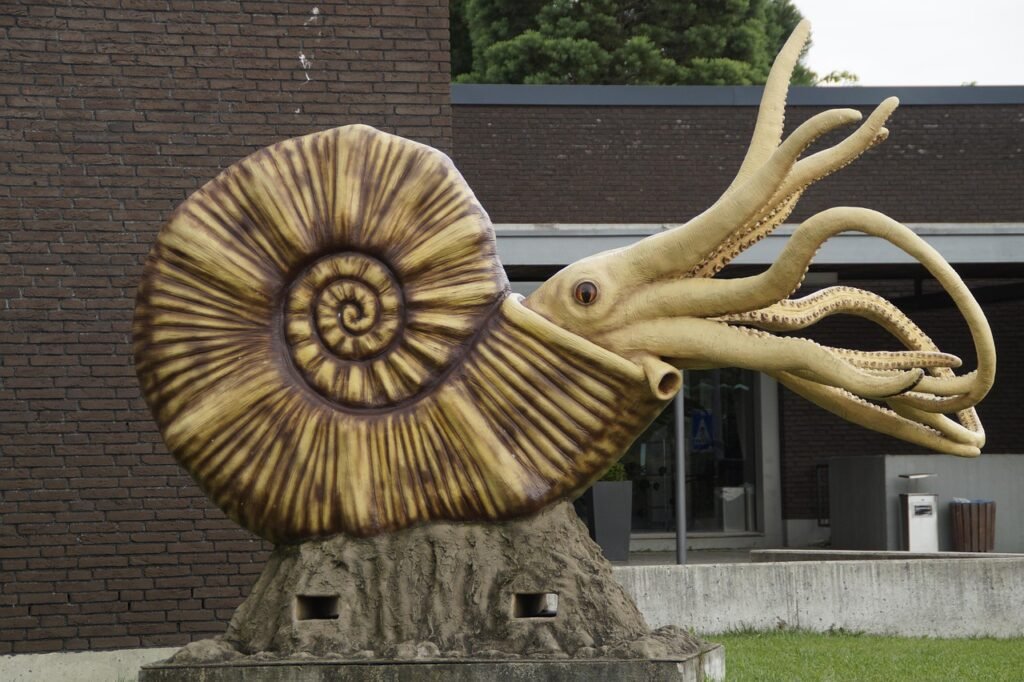
Ammonites were marine creatures related to squids that lived inside coiled shells. They thrived hundreds of millions of years ago, when Earth had a single supercontinent called Pangea and a vast ocean known as Panthalassa. Their spiral shells, often preserved as fossils, are among the most recognizable symbols of prehistoric marine life. They ranged in size from small specimens to large, impressive forms, and are an important part of Earth’s natural history.
3. How Ammolite Forms?
About 66 million years ago, ammonites, along with dinosaurs, became extinct after the impact of a massive asteroid. Their shells, preserved over time, eventually formed the gemstone we know today as ammolite. This transformation from ancient life to a brilliant gemstone makes ammolite a rare link between Earth’s history and natural beauty. Over millions of years, pressure and mineralization enhanced the shell’s structure, creating its remarkable color and durability.
4. Ammolite Sources
Ammonite fossils can be found in many places around the world, including Utah, England, Morocco, and Madagascar. However, the only location that produces gem-quality ammolite in commercial quantities is southwestern Alberta, Canada. This region’s unique geological conditions created the vivid colors and quality that make Canadian ammolite famous worldwide. The deposits are found within layers of shale along river valleys, and strict regulations help preserve this rare natural resource.
5. The Colors and Value of Ammolite
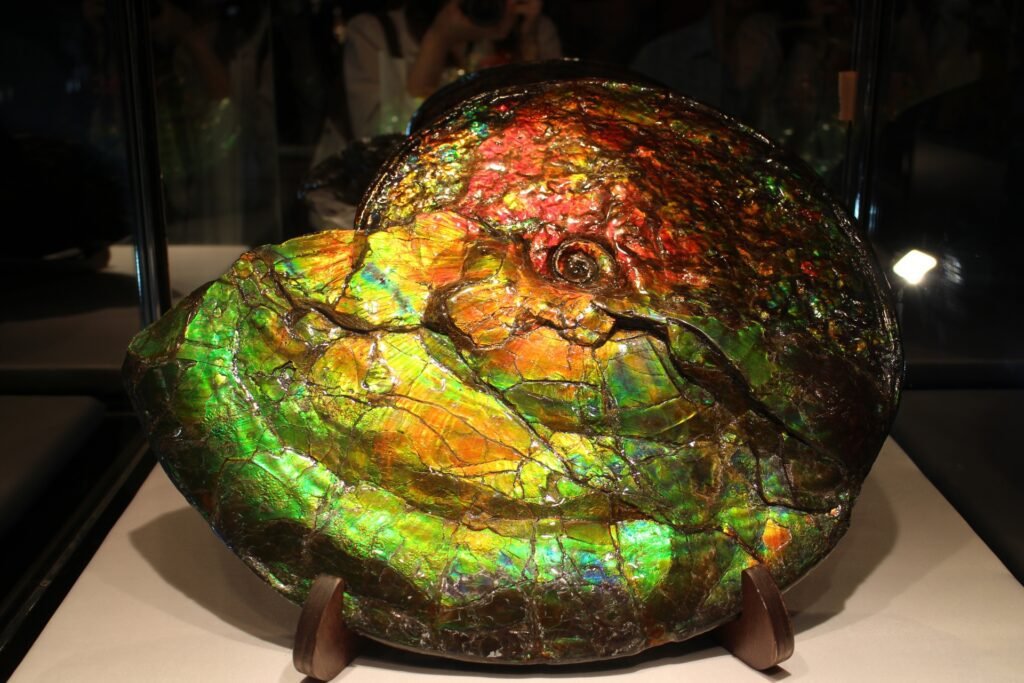
Ammolite most commonly appears in shades of green and red, while blue and violet are much rarer and considered more valuable. The most prized stones display a wide spectrum of colors. Collectors and jewelers often refer to these multicolored specimens as “full-spectrum” ammolites, and they are especially sought after for their striking beauty. The brightness and intensity of the colors also influence the gemstone’s value, with vivid flashes being the most desirable.
6. Ammolite Hardness
Ammolite ranks only 3.5 on the Mohs scale of hardness, making it relatively soft and fragile. To improve durability, it is often cut, polished, and set into doublets or triplets.
7. Ammolite Doublets and Triplets
A doublet consists of a thin slice of ammolite bonded to a dark backing material such as shale, black onyx, or glass. The backing provides strength and enhances the stone’s color contrast. A triplet adds a transparent protective top layer over the ammolite and backing. This cap is usually made of synthetic quartz, synthetic spinel, or glass, and it protects the surface while enhancing the gem’s color through a lens-like effect.
8. Refractive index
Ammolite has a refractive index of 1.52 to 1.68, meaning it bends light in a way that enhances its appearance. Its extremely thin natural layers reflect light to create the gemstone’s vibrant, shifting colors.
9. How to Clean ammolite
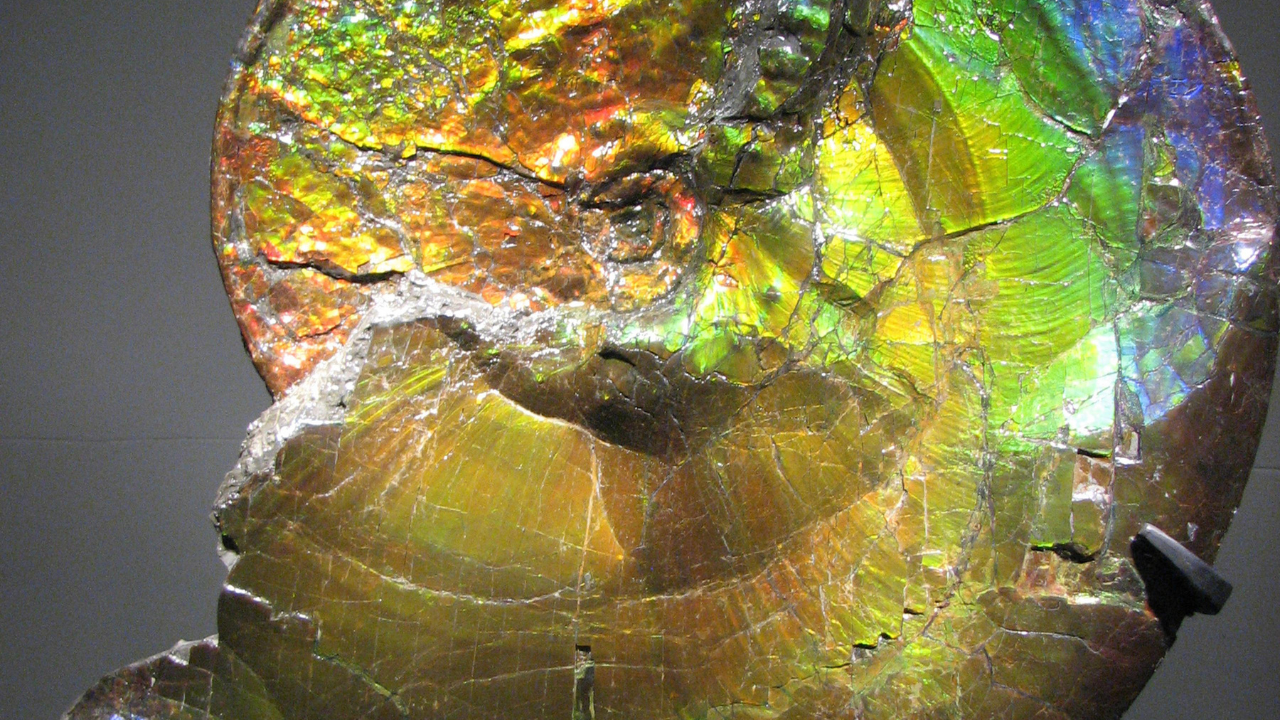
The safest way to care for ammolite is to wipe it gently with a damp, soft, non-abrasive cloth. Avoid chemicals, ultrasonic cleaners, and excessive heat to preserve its vivid colors. Store it separately from harder gemstones to prevent scratches. Gentle handling and proper care will help maintain its beauty and durability over time.
Inspired by the remarkable beauty of ammolite, discover the Gemstone Fusion Wall Art Collection, a curated set of three artistic pieces designed to capture the unique colors and character of this extraordinary gemstone.

📌 Ammolite: Summary
- Organic gemstone, alongside amber and pearl
- Formed from fossilized ammonite shells
- Ammonites lived hundreds of millions of years ago
- Extinct 66 million years ago after asteroid impact
- Formed over millions of years by pressure and mineralization
- Fossils found in Utah, England, Morocco, Madagascar
- Gem-quality ammolite mainly in southwestern Alberta, Canada
- Commonly green and red; blue and violet rarer
- Full-spectrum stones prized for multiple colors
- Soft and fragile, 3.5 on the Mohs scale
- Often made into doublets or triplets for durability