
JOHN QUINCY ADAMS
The Sixth President of the United States
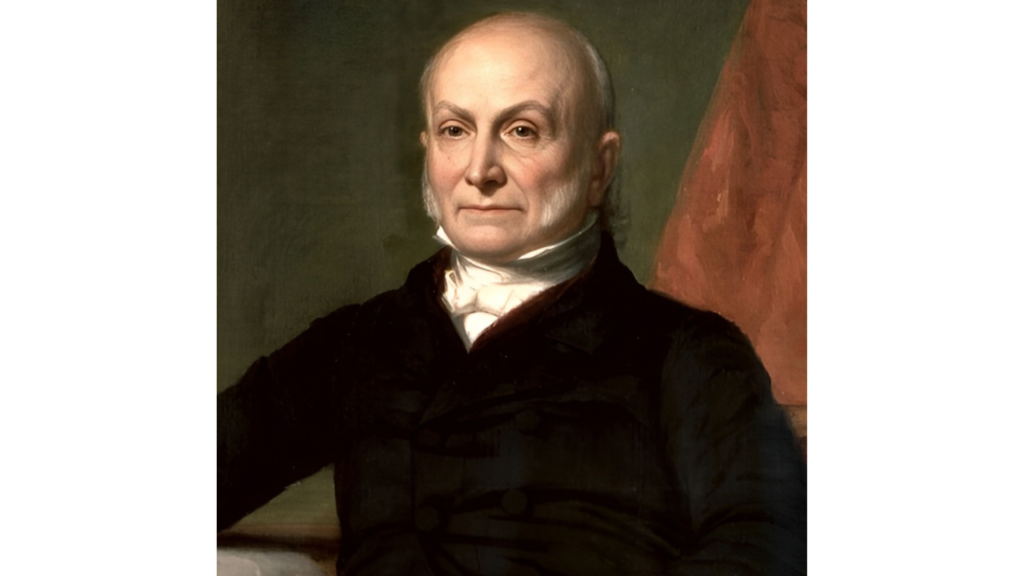
John Quincy Adams was the sixth president of the United States, serving from 1825 to 1829. He also served as U.S. secretary of state, minister in Great Britain, Prussia, and Russia, and U.S. senator representing Massachusetts. He was the eldest son of John Adams, the second president of the United States. Together, they became the first father and son in American history to both serve as president.
1. Early Life and Education
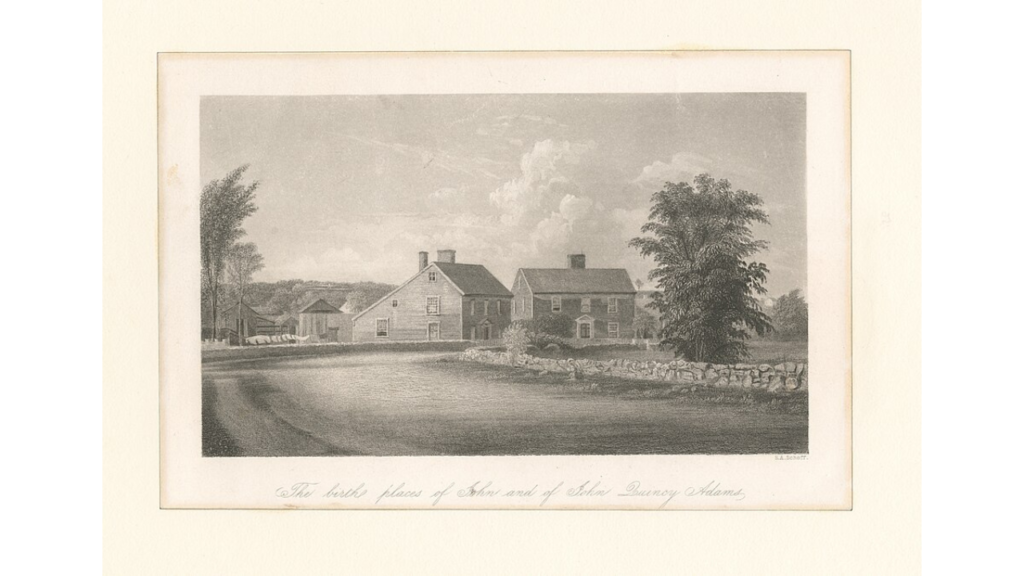
John Quincy Adams was born on July 11, 1767, in Braintree, Massachusetts, in an area that later became the city of Quincy. He spent his early childhood on the family farm and was educated by tutors. At the age of ten, he accompanied his father, John Adams, to Europe as part of American diplomatic missions in France and the Netherlands, where he spent several years traveling and studying. In 1781, at the age of fourteen, Quincy Adams traveled to Saint Petersburg, Russia, where he served as secretary to American diplomat Francis Dana. Although Quincy Adams enjoyed his years in Europe, his family decided that he should return to the United States to complete his education. He entered Harvard College, where he graduated in 1787 and became a member of Phi Beta Kappa, the oldest academic honor society in the United States.
2. Legal Career
After graduating from Harvard in 1787, Quincy Adams studied law in Newburyport, Massachusetts, and opened his own legal practice in Boston in 1790. Despite some difficulties at the beginning of his legal career, he eventually became a successful attorney and achieved financial independence from his parents.
3. Diplomatic Career in Europe
Quincy Adams initially focused on his legal career rather than seeking political office, but his knowledge of international affairs soon led him into diplomacy. In 1794, President George Washington appointed him U.S. minister to the Netherlands, where his main responsibility was securing Dutch loans that helped strengthen the finances of the young United States. Adams also supported Washington’s policy of neutrality during the wars between revolutionary France and European powers.
4. Minister to Prussia
In 1797, Quincy Adams became U.S. minister to Prussia, where he worked to strengthen American trade relations and negotiated a new commercial agreement with Prussia in 1799. His experience in Europe also allowed him to provide valuable information about European affairs during tensions between the United States and France. When Thomas Jefferson defeated his father, John Adams, in the 1800 presidential election, Quincy Adams left diplomatic service the following year.
5. U.S. Senate
After returning to the United States in 1801, Quincy Adams resumed his legal career in Boston. In 1802, he was elected to the Massachusetts Senate, and the following year he entered the U.S. Senate as a member of the Federalist Party. During his time in the Senate, Adams increasingly disagreed with many Federalists over foreign policy. Unlike other New England Federalists, he supported the Louisiana Purchase and opposed British interference with American shipping during the Napoleonic Wars. His support for the Embargo Act of 1807 further separated him from his party, and Quincy Adams resigned from the Senate in 1808.
6. Academic Career
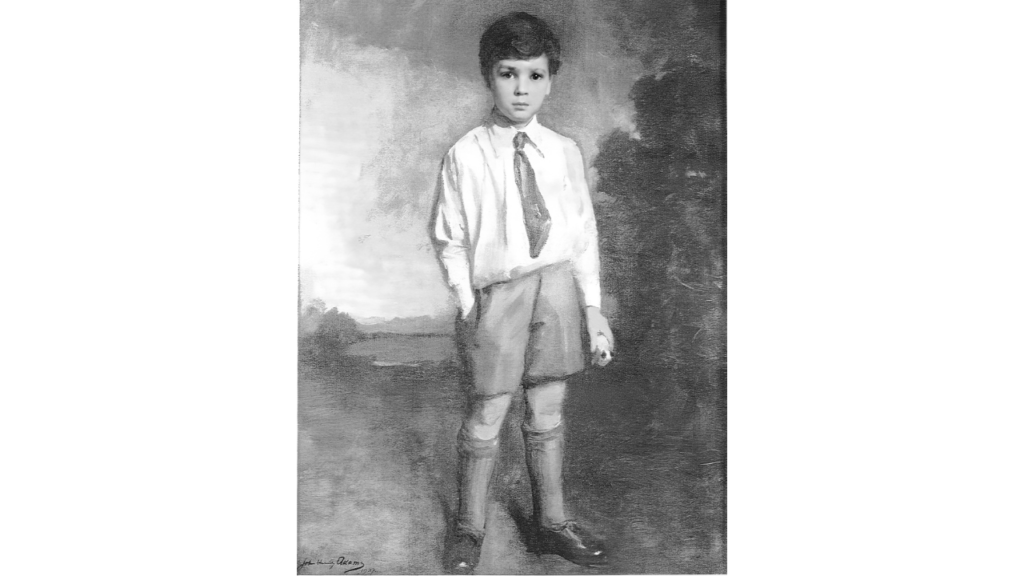
Quincy Adams also pursued an academic career, serving as a professor of logic at Brown University and later as the Boylston Professor of Rhetoric and Oratory at Harvard University. His strong interest in classical rhetoric influenced the way he approached public issues and political debate. In 1810, he published Lectures on Rhetoric and Oratory, a work examining the importance of public speaking, political liberty, and eloquence in the life of a young nation.
7. Diplomatic Career in Russia
After resigning from the Senate, Quincy Adams returned to his legal career. In 1809 President James Madison appointed him the first U.S. minister to Russia. Based in Saint Petersburg, Quincy Adams developed strong working relationships with Russian officials and maintained his support for American neutrality during the Napoleonic Wars. His position also gave him a close view of European affairs, including Napoleon’s invasion of Russia in 1812 and the eventual defeat of the French army.
8. War of 1812 and Treaty of Ghent
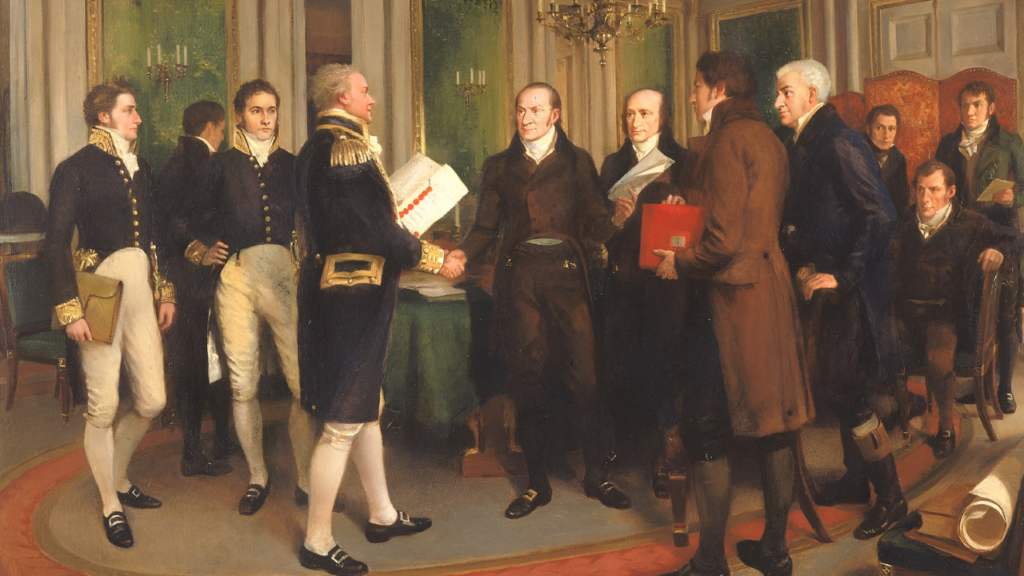
When the United States declared war on Britain in 1812, Quincy Adams became part of the American delegation sent to negotiate an end to the conflict. The negotiations eventually moved to Ghent, Belgium, where Adams worked alongside Albert Gallatin, James A. Bayard, Henry Clay, and Jonathan Russell. The American delegation rejected British demands for restrictions on U.S. expansion, and negotiations continued until both sides agreed to restore the situation that had existed before the war. The Treaty of Ghent was signed on December 24, 1814, officially ending the War of 1812. Although the treaty did not resolve every issue that had led to the conflict, the United States had successfully reached a peace agreement with Britain without giving up major territorial concessions.
9. Minister to Great Britain
In 1815, Quincy Adams became U.S. minister to Great Britain. While in London, he helped negotiate a trade agreement with Britain and assisted American sailors and prisoners of war. In 1817, President James Monroe appointed Quincy Adams secretary of state, bringing his years of diplomatic experience in Europe into a leading role in the U.S. government.
9. Adams–Onís Treaty
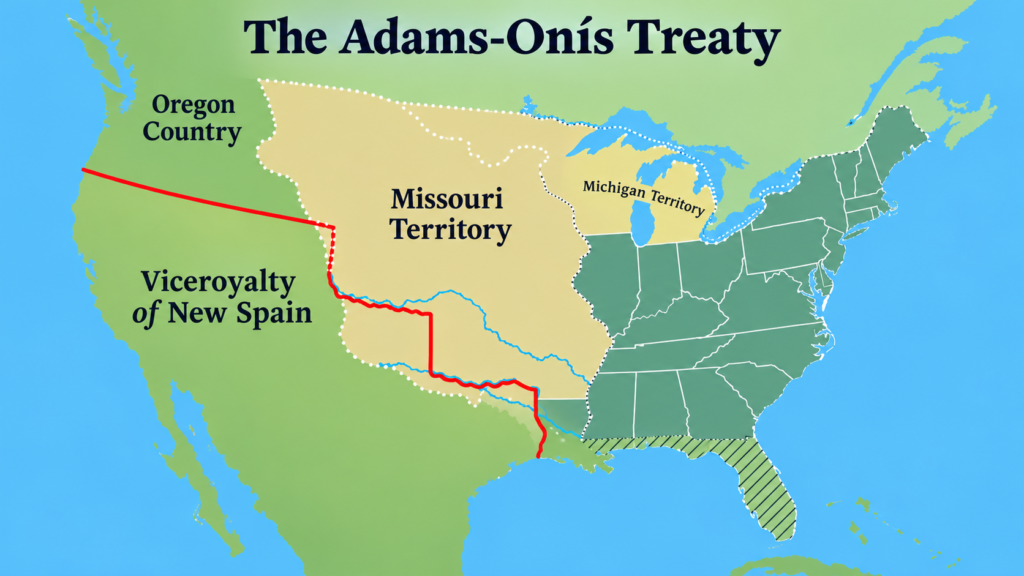
One of Quincy Adams’s major diplomatic achievements was the Adams–Onís Treaty with Spain, negotiated while he was secretary of state. The United States had long wanted to acquire Florida, while the western boundary of the Louisiana Purchase with Spanish territory remained unclear. Negotiations became more complicated after General Andrew Jackson entered Florida during the Seminole conflict and captured several Spanish positions. Quincy Adams defended Jackson’s actions as necessary for American self-defense and used the situation to pressure Spain to resolve the dispute. After extended negotiations, Spain agreed to cede Florida to the United States and accepted a boundary that gave the United States control of its claims to the Pacific Northwest. The treaty was ratified in 1821 and significantly strengthened the territorial position of the United States.
10. The Monroe Doctrine
As secretary of state, Quincy Adams played an important role in shaping the policy that became known as the Monroe Doctrine. In 1823, Britain proposed that the United States and Britain work together to protect the independence of the newly established republics in Latin America. Adams opposed a formal alliance and instead urged President James Monroe to declare that the United States would oppose any European attempt to colonize or regain control of territory in the Americas, while remaining neutral in European conflicts. Monroe adopted this approach in his annual message to Congress in December 1823, announcing what became known as the Monroe Doctrine.
11. Presidency
John Quincy Adams became the sixth president of the United States, serving one term from 1825 to 1829. He was the first child of a former U.S. president to become president himself.
12. A Vision for National Development
As president, John Quincy Adams promoted a broad vision for national development, supporting improvements in transportation while also proposing greater investment in education and science. He called for federal support for roads, canals, and other internal improvements, but many of his proposals were blocked by Congress and were not completed during his presidency.
13. Return to Congress
After leaving the presidency, John Quincy Adams returned to public life and was elected to the U.S. House of Representatives in 1830. He served in Congress from 1831 until his death, becoming one of the few former presidents to return to national office. During his years in the House, Adams became a strong opponent of slavery and fought against the “gag rule,” which prevented Congress from discussing petitions calling for an end to slavery, helping to repeal the rule in 1844.
14. The Amistad Case
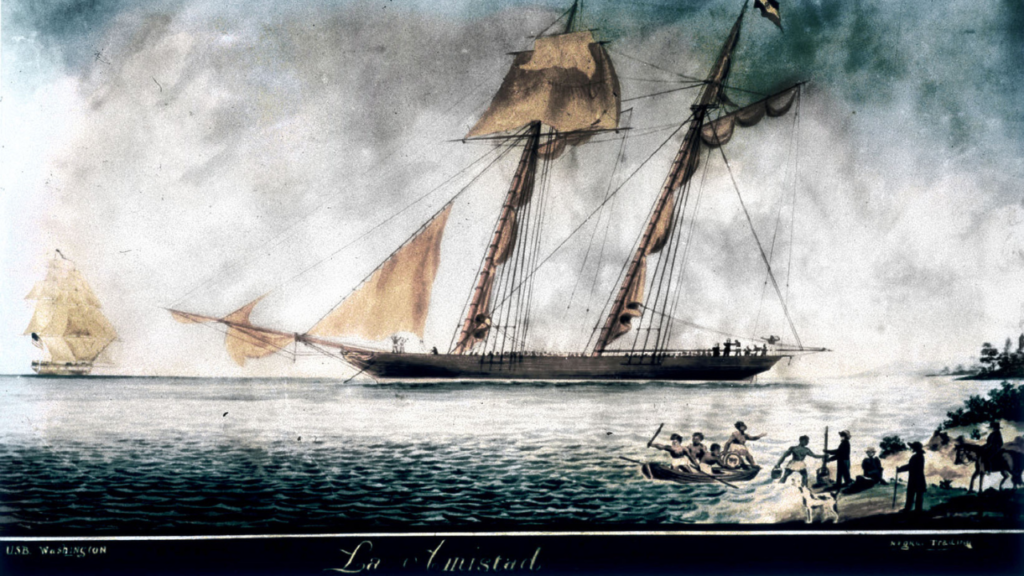
In 1841, Quincy Adams agreed to defend the African captives in the famous Amistad case. The Africans, who were Mende people from present-day Sierra Leone, had been kidnapped and illegally transported aboard the Spanish ship Amistad to be sold as slaves when they rebelled and took control of the ship. Adams argued that they were legally free, and the Supreme Court ruled in their favor. As a result, the surviving Africans were able to return to Africa in 1842.
15. Supporting the Smithsonian
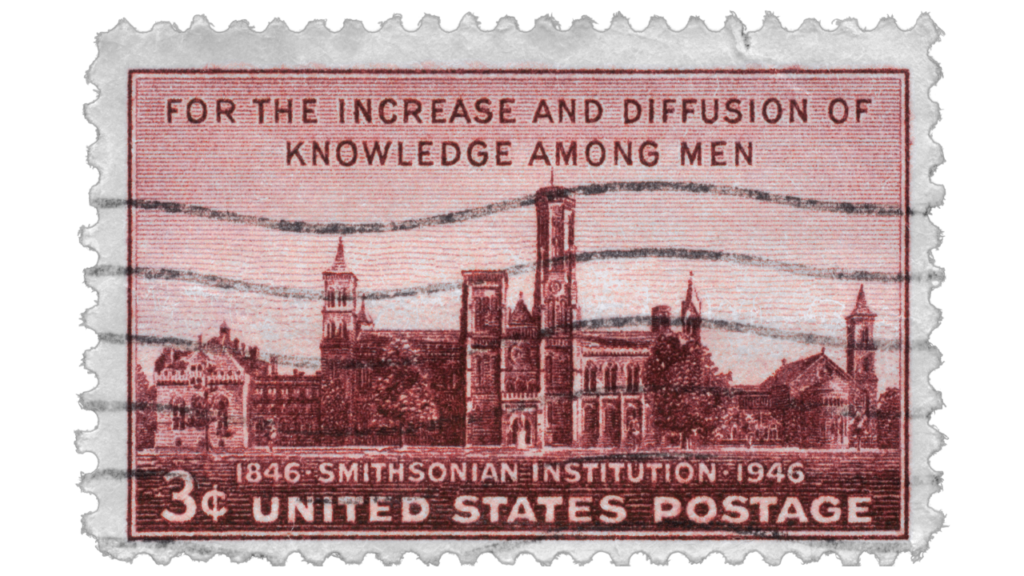
Quincy Adams also played an important role in establishing the Smithsonian Institution. After British scientist James Smithson left his fortune to the United States to promote knowledge, Adams fought to protect the funds and ensure they were used for scientific and educational purposes. His efforts helped lead Congress to establish the Smithsonian Institution in 1846.
16. Death and Legacy
John Quincy Adams passed away on February 23, 1848, in Washington, D.C., at the age of 80. His lifelong commitment to public service left a lasting mark on the nation he had served in so many different roles. His vision for American territory, education, and human rights continued to shape the United States for generations to come.
Inspired by the leaders who shaped American history, discover the U.S. Presidents Wall Art Collection, a curated collection of artistic portraits to collect, display, and enjoy as your own timeless gallery of American history.

📌 John Quincy Adams: Summary
- Sixth U.S. President: Served from 1825 to 1829 and was the first child of a former U.S. president to become president himself.
- Early Life and Education: Born in 1767 in Braintree, Massachusetts. He traveled to Europe with his father as a child, studied in several countries, and graduated from Harvard College in 1787.
- Legal Career: Studied law in Newburyport and opened a legal practice in Boston in 1790.
- Diplomatic Career: Served as U.S. minister to the Netherlands, Prussia, Russia, and Great Britain, gaining extensive experience in international affairs.
- Political Career: Served in the Massachusetts Senate and U.S. Senate before becoming secretary of state under President James Monroe.
- Major Diplomatic Achievements: Helped negotiate the Treaty of Ghent, which ended the War of 1812, and negotiated the Adams–Onís Treaty, through which the United States gained Florida and Spain gave up its claims to the Oregon Country.
- Monroe Doctrine: Played a major role in shaping the policy that became known as the Monroe Doctrine, opposing further European attempts to control territory in the Americas.
- Presidency: Promoted national development, education, science, and federal support for roads, canals, and other internal improvements, although many of his proposals were blocked by Congress.
- Return to Congress: After his presidency, he returned to national politics as a member of the U.S. House of Representatives, serving from 1831 until his death.
- Fight Against Slavery: Became a strong opponent of slavery and fought against the “gag rule,” helping to repeal it in 1844.
- Amistad Case: Defended the African captives in the Amistad case, helping secure their freedom and their return to Africa.
- Smithsonian Institution: Played an important role in protecting James Smithson’s bequest and supporting the creation of the Smithsonian Institution in 1846.
- Death and Legacy: Died in 1848 at the age of 80 after a lifetime of diplomatic, political, and public service.