

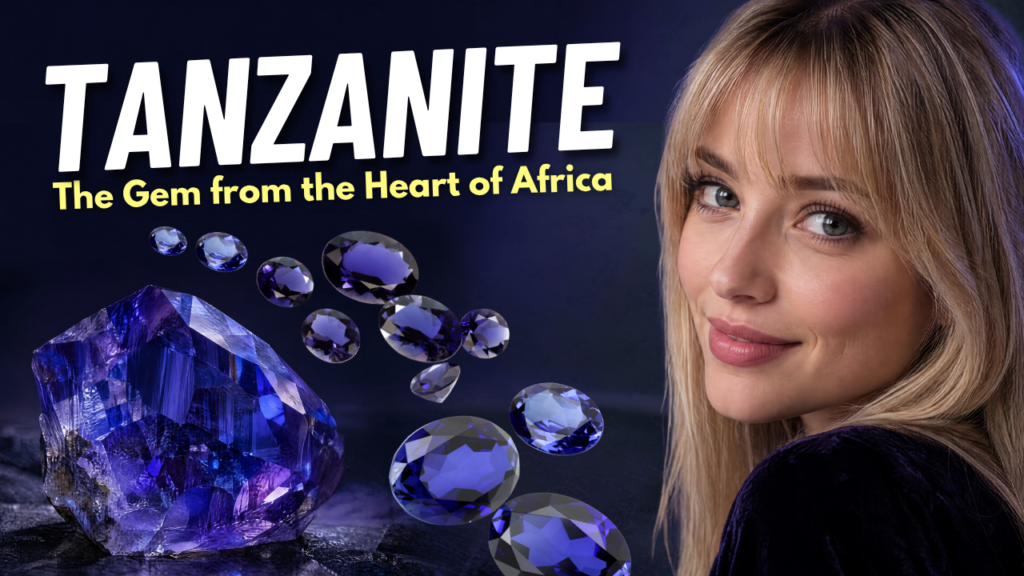
TANZANITE
The Gem from the Heart of Africa

Tanzanite has captivated people with its remarkable blue-violet color and extraordinary rarity. Its journey from the landscapes of Tanzania to a treasured gemstone is a story shaped by nature, discovery, and the fascination of the jewelry world.
1. What Is Tanzanite
Tanzanite is the violet-blue to blue-violet variety of the mineral zoisite. Zoisite itself naturally occurs in a wide range of colors, including gray, yellow, brown, green, colorless, blue, and violet. Tanzanite is unique because of its striking blue shades, which make it highly sought after as a gemstone. Its captivating color is due to the presence of the element vanadium. This rare gemstone has quickly become a favorite among collectors and jewelry lovers alike.
2. Discovery and Naming
Blue zoisite was discovered in 1967 in Tanzania by a Masai tribesman named Ali Juuyawatu. Just a year later, in 1968, Tiffany & Co. officially named the gem “Tanzanite” and became its main distributor. The discovery quickly brought international attention to this previously unknown stone. Its name reflects its country of origin, making it instantly recognizable.

3. Mining Tanzanite
Tanzanite is mined in only one place on Earth—the Merelani Hills, near the base of Mount Kilimanjaro in Tanzania. This exclusive location adds to the gemstone’s rarity and value. Because it is only found in a small geographic area, the supply of high-quality stones is limited. Large, vivid blue Tanzanite stones are especially rare and highly prized by collectors, museums, and investors. The uniqueness of its origin makes Tanzanite a truly remarkable gem.
4. Optical Properties and Quality
Tanzanite can show different colors when viewed from different angles. This effect, called pleochroism, gives Tanzanite a fascinating depth and visual complexity. The highest quality Tanzanites display a vivid blue color, which is the most sought after. Stones with this intense color are rare and command high prices. Even smaller stones can be valuable if they show strong color and clarity.
5. How Hard Is Tanzanite
Tanzanite has a hardness of 6.5 on the Mohs scale, making it suitable for many types of jewelry. However, it is softer than gemstones such as sapphire and ruby, so it should be worn with some care. Jewelry featuring tanzanite is best protected from hard knocks and scratches.

6. Birthstone & Anniversary
Tanzanite is the birthstone for December and is traditionally associated with the 24th wedding anniversary. Many people also believe that tanzanite has spiritual benefits and can help stimulate joy and restore balance. It is sometimes associated with personal power and positive energy.
7. How to Clean Tanzanite
The safest way to clean tanzanite is with a soft toothbrush, warm water, and mild soap. Harsh chemicals should be avoided because they may damage the stone. Ultrasonic cleaners are also not recommended for tanzanite.
8. Refractive index
Tanzanite has a refractive index of approximately 1.691–1.700. This relatively high refractive index contributes to its attractive brilliance and lively appearance. Because tanzanite is strongly trichroic, its color can also appear different when viewed from different directions.

📌 Tanzanite: Summary
- Blue-violet variety of zoisite mineral
- Color from vanadium
- Discovered in 1967, Tanzania; named by Tiffany & Co.
- Found only in Merelani Hills, near Mount Kilimanjaro
- Strong pleochroism (shows different colors from angles)
- Most valued: vivid deep blue stones
- Hardness 6.5, requires careful wear
- Birthstone for December; 24th anniversary gemstone
- Rare gemstone with limited supply
- Refractive index of approximately 1.691–1.700
▶️ Watch on YouTube
🛒 Shop with us
- Love what we do?
- Shop with us to support our project!
