
PERIDOT
Volcanic and Extraterrestrial Gem

Peridot has been treasured from ancient Egyptian times to the present day, admired for its distinctive green color and timeless beauty. Today, it remains a popular gemstone valued for its elegant and vibrant appearance.
1. What Is Peridot
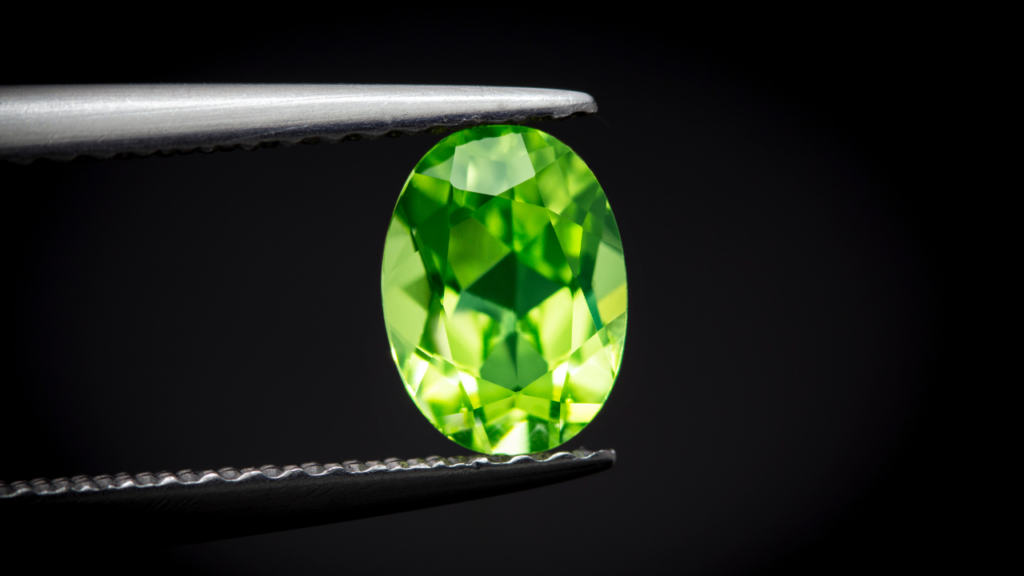
Peridot is a variety of the mineral olivine. It ranges in color from green to yellowish-green or greenish-yellow. Its vibrant hue comes from the presence of iron in the mineral olivine. The most highly valued shades are dark olive green and bright lime green, which are particularly striking in jewelry. Peridot has a long history of being treasured for its unique color and glow.
2. Origin of the Name
The word “Peridot” comes from the Arabic word “Faridat,” which means “gem.” Ancient Egyptians called it “The Gem of the Sun” because of its radiant green color. Mining of Peridot began as early as 340–279 BCE, making it one of the oldest known gemstones in human history. Its rich history adds to the gemstone’s allure and cultural significance.
3. How Peridot Forms
Peridot forms deep within the Earth and reaches the surface through volcanic activity. Magma brings the mineral up, and when porous lava hardens around it, the Peridot becomes trapped in solid rock. In extremely rare cases, Peridots have even been found in meteorites, earning them the name “Extraterrestrial Peridots.” This unique origin makes Peridot a gemstone with both terrestrial and cosmic connections.
4. Where Peridot is Found
Peridot is mined in various parts of the world, including China, Myanmar, Pakistan, Norway, Tanzania, Vietnam, and the United States. Each location produces stones with slightly different shades and qualities, allowing collectors to find unique pieces. Despite being found in multiple countries, high-quality Peridot is still considered relatively rare.
5. Hardness and Durability
Peridot is moderately hard, scoring 6.5 to 7 on the Mohs scale of hardness. Its surface can be scratched by harder materials, so it should be handled with care. With proper care, peridot can retain its beauty and shine for many years.
6. How to Clean Peridot
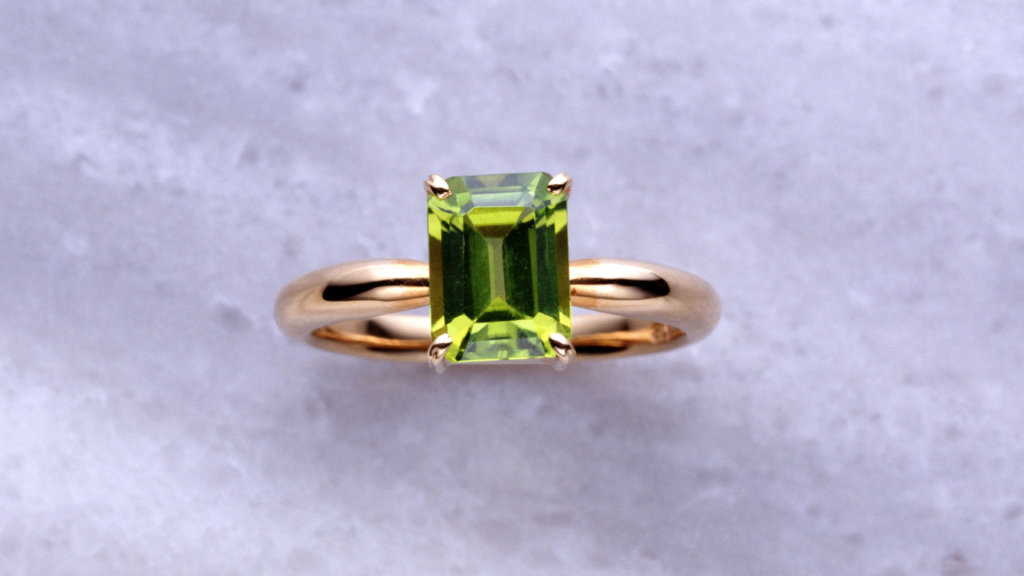
To maintain its vibrant color and shine, peridot should be cleaned with warm soapy water and a soft toothbrush. Harsh chemicals and ultrasonic cleaners should be avoided, as they can damage the stone. Gentle cleaning and proper storage will help preserve its beauty over time.
7. Birthstone & Anniversary
Peridot is the birthstone for August and is also associated with the 16th wedding anniversary. It is believed to balance emotions, bring harmony to relationships, promote good health, and support restful sleep. Many people wear Peridot for its calming and positive energy, making it a meaningful choice for both jewelry and personal talismans.
8. Refractive index
The refractive index measures how much light bends as it passes through the gemstone, affecting how light travels and appears within the stone. Peridot has a refractive index ranging from 1.654 to 1.690. This range contributes to the gemstone’s brightness and helps create attractive reflections within the stone.
Inspired by the remarkable beauty of peridot, discover the Gemstone Fusion Wall Art Collection, a curated set of three artistic pieces designed to capture the unique colors and character of this extraordinary gemstone.

📌 Peridot: Summary
- A green to yellow-green gemstone from the olivine mineral family
- Name means “gem”; called “The Gem of the Sun” by Egyptians
- Forms deep in the Earth; sometimes found in meteorites
- Mined worldwide; top-quality stones are rare
- Hardness 6.5–7; clean gently with soapy water
- August birthstone; 16th wedding anniversary gem