
MALACHITE
The Gem Named After a Flower
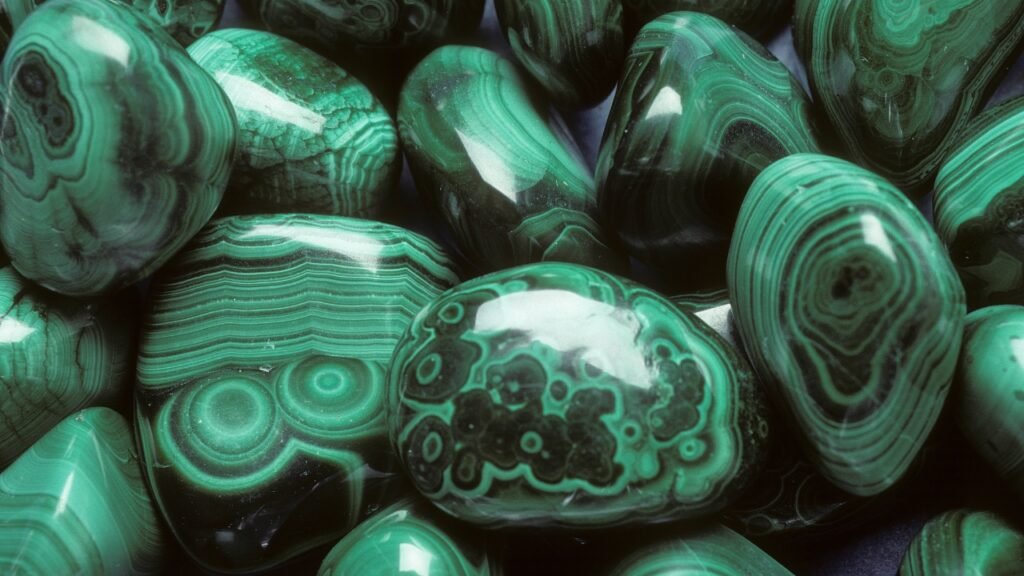
Malachite is a mineral that has been known and used by people since ancient times. Over the centuries, it has been used in jewelry, decorative objects, artwork, and as a source of pigment.
1. What Is Malachite
Malachite is a vibrant green copper carbonate hydroxide mineral known for its distinctive banded patterns. It forms mainly in the upper parts of copper deposits and has a long history of use as an ornamental stone.
2. Color and Appearance
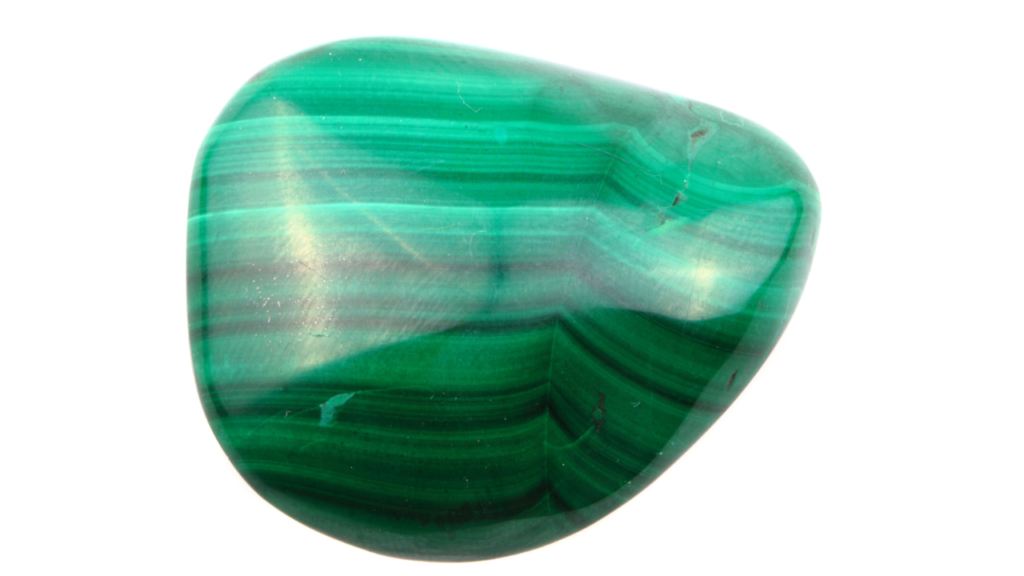
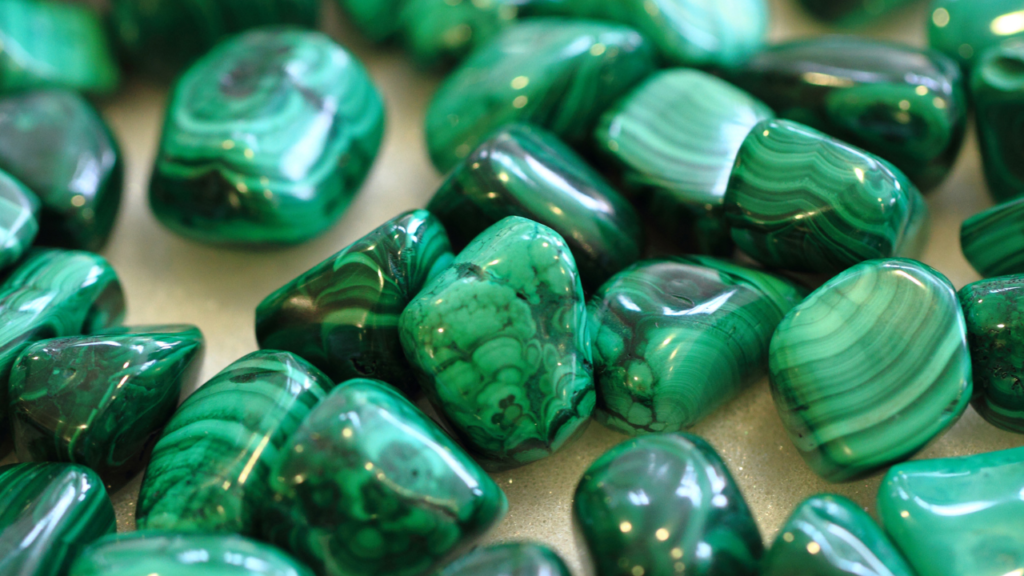
Malachite is typically bright to dark green, with shades ranging from pale green to deep, rich green. Its most distinctive feature is its natural banding, which forms curved, concentric, or wavy patterns in different shades of green. When polished, these patterns become especially visible, giving each piece a unique and striking appearance.
3. The Origin of Its Name
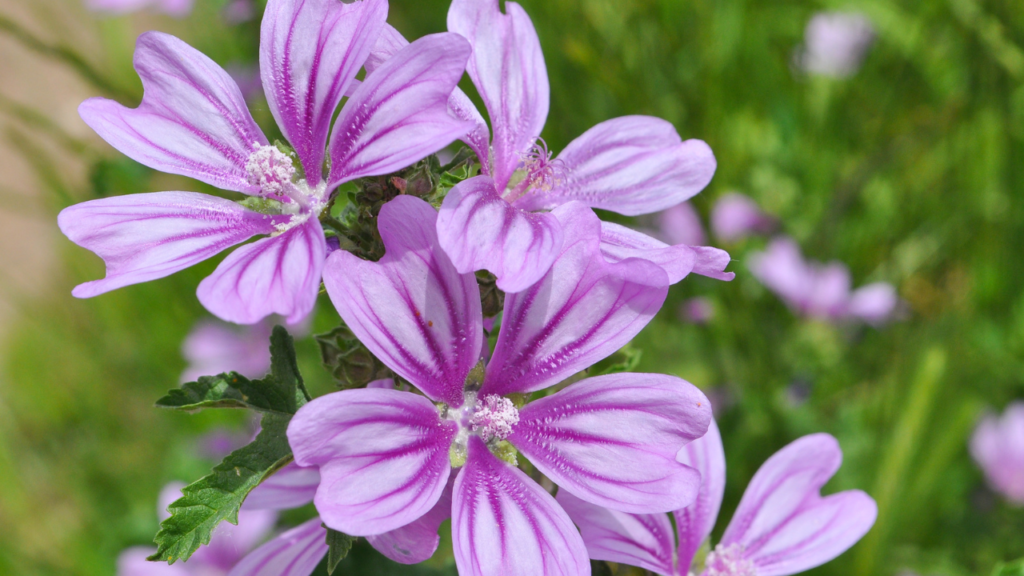
The name “Malachite” comes from the Greek words molochites lithos, which mean “mallow-green stone.” This name refers to the stone’s resemblance to the leaves of the mallow plant. Its green tones have long made it a symbol of nature and vitality. The ancient Greeks appreciated its beauty and used it for various ornamental purposes.
4. Historical Significance
Malachite has a long history dating back to around 4000 BC in Egypt and Israel. It was used as a gemstone, in sculptures, and as a pigment for painting. Ancient Egyptian tombs and murals show some of the earliest uses of malachite as a green pigment. During the 15th, 16th, and 17th centuries, it continued to be a popular pigment for artists seeking vibrant, long-lasting green colors.
5. Decorative Uses
Beyond art, malachite was widely used for decoration. Famous examples include “The Malachite Room” in the Hermitage Museum in Russia and a similarly named room in Castillo de Chapultepec in Mexico City. These spaces highlight the stone’s luxurious appeal and unique patterns. Its use in interiors demonstrates how malachite has long been associated with elegance and wealth.
6. Mining and Sources
Malachite was mined in the Ural Mountains of Russia until the late 1800s and early 1900s, when the major deposits were finally exhausted. Today, most malachite comes from the Democratic Republic of the Congo. Smaller deposits are found in France, Australia, and Arizona in the United States. Its limited availability adds to its value and rarity.
7. Hardness of Malachite
Malachite is relatively soft, with a hardness of 3.5 to 4 on the Mohs scale, so it can be scratched or damaged more easily than harder gemstones. To help protect it, store malachite separately from harder gemstones and jewelry, preferably in a soft pouch or a lined jewelry box.
8. How to Clean Malachite
The safest way to clean malachite jewelry is with mild soapy water and a soft brush. Avoid harsh chemicals and abrasive materials, as they can easily damage the stone’s surface. After cleaning, rinse it gently with clean water and dry it thoroughly with a soft cloth.
9. Refractive index
Malachite has a refractive index ranging from approximately 1.655 to 1.909, which means it bends light strongly as light enters the stone. This can give polished malachite a bright, glassy surface appearance, with light reflecting clearly from its surface.
Inspired by the remarkable beauty of malachite, discover the Gemstone Fusion Wall Art Collection, a curated set of three artistic pieces designed to capture the unique colors and character of this extraordinary gemstone.

📌 Malachite: Summary
- Copper carbonate hydroxide mineral
- Colors: light to deep green
- Known for banded, swirling patterns
- Name means “mallow-green stone”
- Used since ancient Egypt as pigment and gemstone
- Popular in art, jewelry, and decorative objects
- Major source: Democratic Republic of the Congo
- Also found in Russia, Australia, USA, France
- Hardness: 3.5–4 on Mohs scale