
LABRADORITE
The Northern Lights Gem
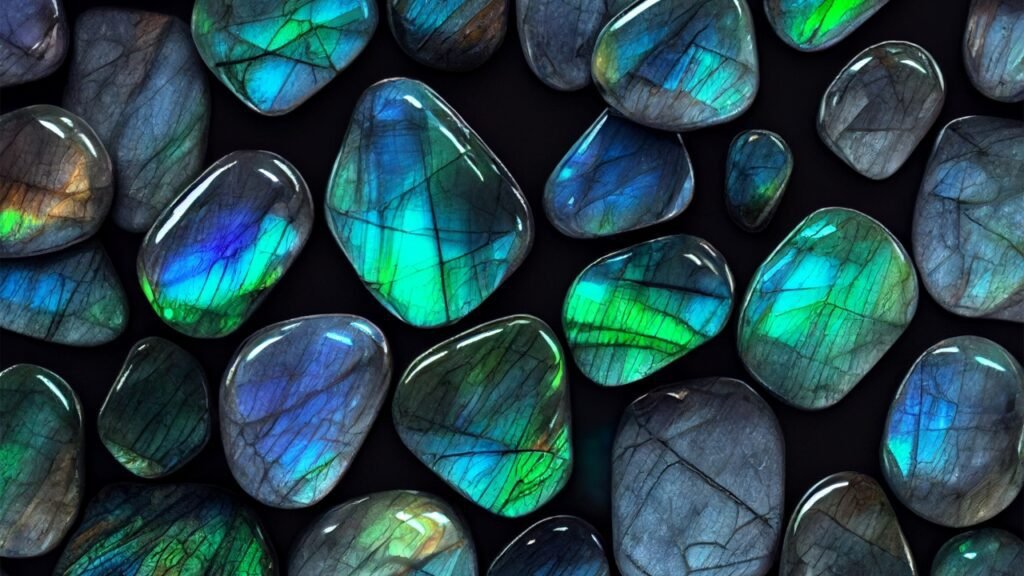
Labradorite is a fascinating gemstone admired for its unique optical effects and striking natural appearance. It has captured the attention of jewelry designers, collectors, and gem enthusiasts around the world.
1. What Is Labradorite
Labradorite is a variety of plagioclase feldspar, one of the most common minerals in the Earth’s crust. This stone was first discovered in 1770 by a Moravian missionary on Paul Island, near Nain in Labrador, Canada. Its name honors this remote and rugged region where it was found. From the very beginning, Labradorite has captivated people with its striking visual effects.
2. The Legend Behind Labradorite
The Indigenous Inuit people called Labradorite a “fire stone” because of its dazzling play of colors. According to legend, the Northern Lights were trapped inside rocks, and a courageous warrior freed them by striking the stones with his spear. This story reflects the magical aura and mystical charm that has surrounded Labradorite for centuries. Many cultures believe the stone carries protective and inspirational energy. The legend gives Labradorite a story beyond its physical beauty, connecting people to nature and ancient traditions.
3. Nature’s Light Show
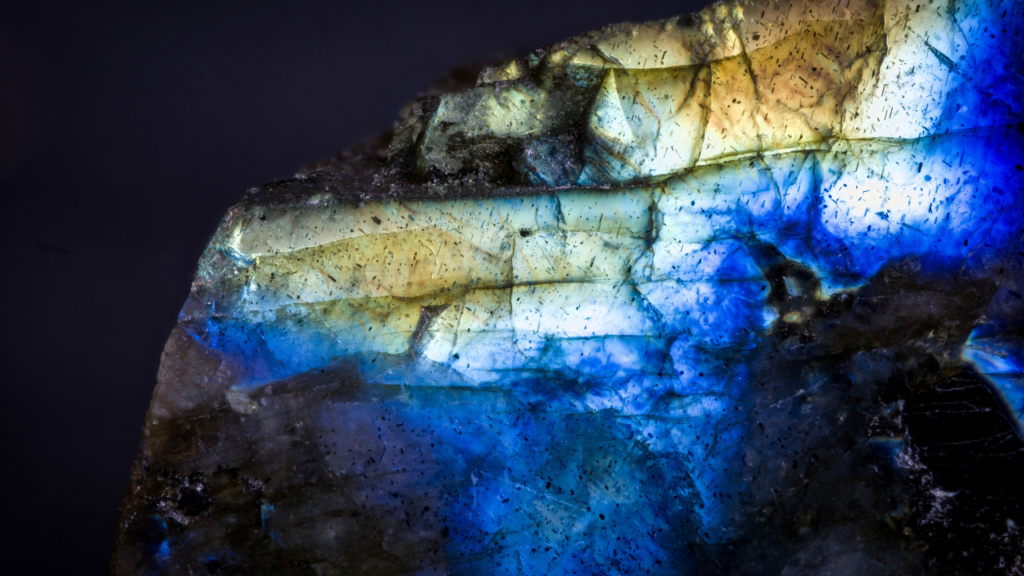
One of the most fascinating features of Labradorite is labradorescence, a phenomenon that creates a metallic, rainbow-like shimmer across the stone’s surface. This effect occurs when light hits the internal layers of the mineral, producing flashes of blue, green, gold, and sometimes even red. Each Labradorite stone has a unique pattern and intensity of colors, making it one-of-a-kind. Spectrolite, a rare variety from Finland, is especially prized for its vibrant, full-spectrum colors. It is both visually stunning and scientifically intriguing, showcasing the beauty hidden within nature.
4. Global Sources of Labradorite
Labradorite can be found in many parts of the world, including Canada, Madagascar, Russia, Poland, Norway, China, Australia, Slovakia, and the United States. The highest-quality stones are often sourced from Eastern Canada and Madagascar. Finland produces Spectrolite, known for its exceptional color play and rare beauty. Each region produces stones with slightly different characteristics, from subtle blue flashes to brilliant rainbow effects.
5. How Hard Is Labradorite
Labradorite has a hardness of 6 to 6.5 on the Mohs scale, making it durable enough for jewelry while still requiring gentle care.
6. How to Clean Labradorite
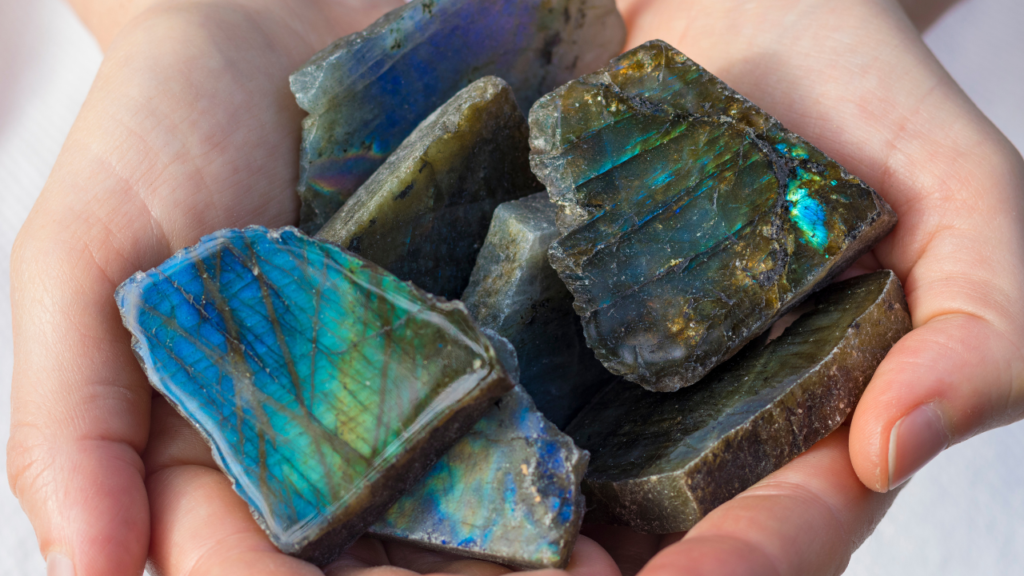
The best way to clean labradorite is gently with lukewarm water, mild soap, and a soft cloth. Avoid harsh chemicals, ultrasonic cleaners, steam cleaners, and abrasive materials, as they can damage the stone or its surface. After cleaning, rinse it thoroughly and dry it with a soft, lint-free cloth.
7. Refractive index
Labradorite typically has a refractive index of about 1.559–1.573, meaning it bends light as it passes through the stone. This optical property, combined with its internal structure, contributes to the way light interacts with labradorite and helps in identifying the gemstone.
Inspired by the remarkable beauty of labradorite, discover the Gemstone Fusion Wall Art Collection, a curated set of three artistic pieces designed to capture the unique colors and character of this extraordinary gemstone.

📌 Labradorite: Summary
- Variety of plagioclase feldspar
- Discovered in Canada (1770)
- Known for labradorescence (rainbow shimmer)
- Colors: blue, green, gold, orange, sometimes red
- Each stone has unique light patterns
- Rare variety: Spectrolite (Finland)
- Found in Canada, Madagascar, Finland, Russia, USA
- Hardness: 6–6.5 on Mohs scale