
KUNZITE
The Gem Named After George Kunz
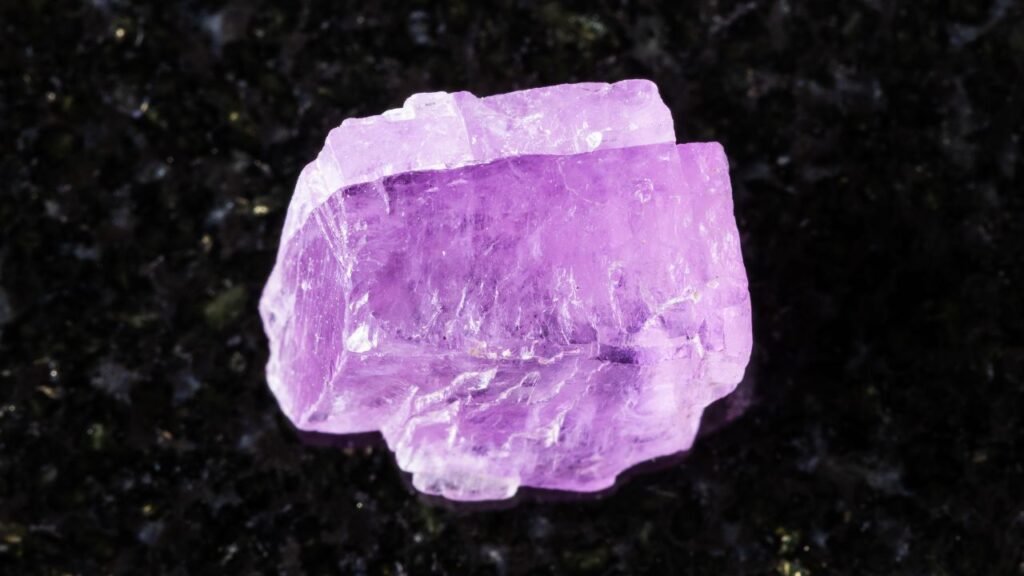
Kunzite is a captivating gemstone that has attracted attention for its elegant appearance and distinctive character. Its history, name, and natural formation make it an interesting stone to explore.
1. Discovery and Naming of Kunzite
Kunzite was first discovered in San Diego in 1902 and quickly captured the attention of gem enthusiasts. The stone was sent to Tiffany & Co.’s mineralogist, George Frederick Kunz, who confirmed it as a new variety of the mineral spodumene. A year later, in 1903, the gem was officially named “kunzite” in his honor.
2. Colors and Composition
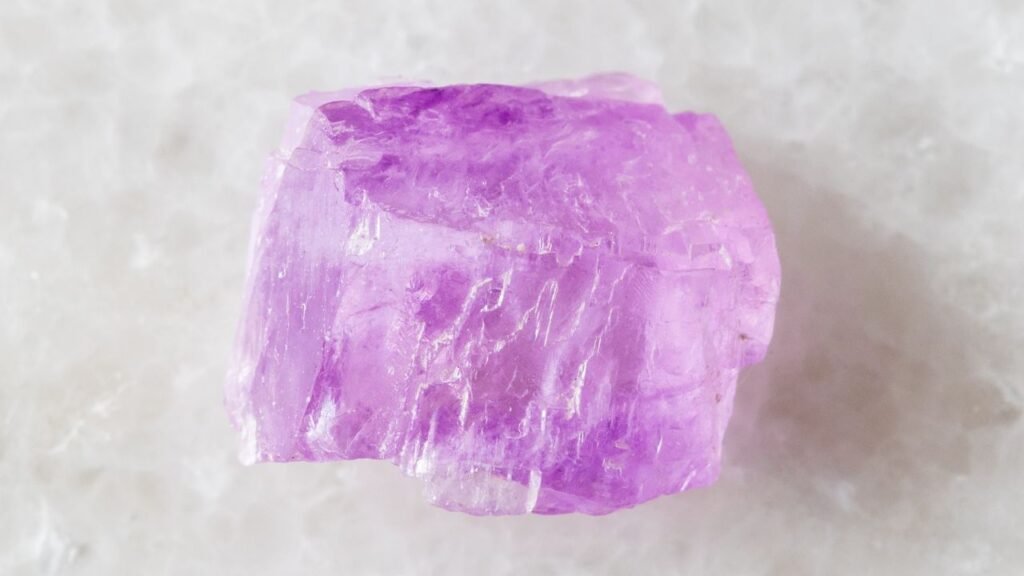
The delicate lilac-pink hues of kunzite come from traces of manganese within the stone. Its color can range from soft pink to deep purple, offering a spectrum of shades for jewelry designers. The intensity of the color greatly affects its value, with more vivid stones considered the most prized. Kunzite’s soft yet captivating palette makes it a standout in both modern and vintage jewelry collections. Its unique coloration contributes to its appeal for both casual wearers and serious collectors.
3. Global Sources
Although California remains the most famous source of kunzite, other countries contribute notable specimens, including Afghanistan, Brazil, Mozambique, and Madagascar. The Smithsonian Institution houses one of the most remarkable kunzites: a faceted, heart-shaped gem weighing an impressive 880 carats. Such large examples are rare, which adds to the allure and mystique of the gem. Collectors often seek out kunzite not only for its beauty but also for its historical and geographical significance.
4. How Hard Is Kunzite
Kunzite has a hardness of 6.5 to 7.0 on the Mohs scale, making it somewhat delicate compared to other gemstones. Because of this, it requires careful handling to avoid scratches or damage. Direct sunlight should be avoided, as prolonged exposure can cause its color to fade.
5. How to Clean Kunzite
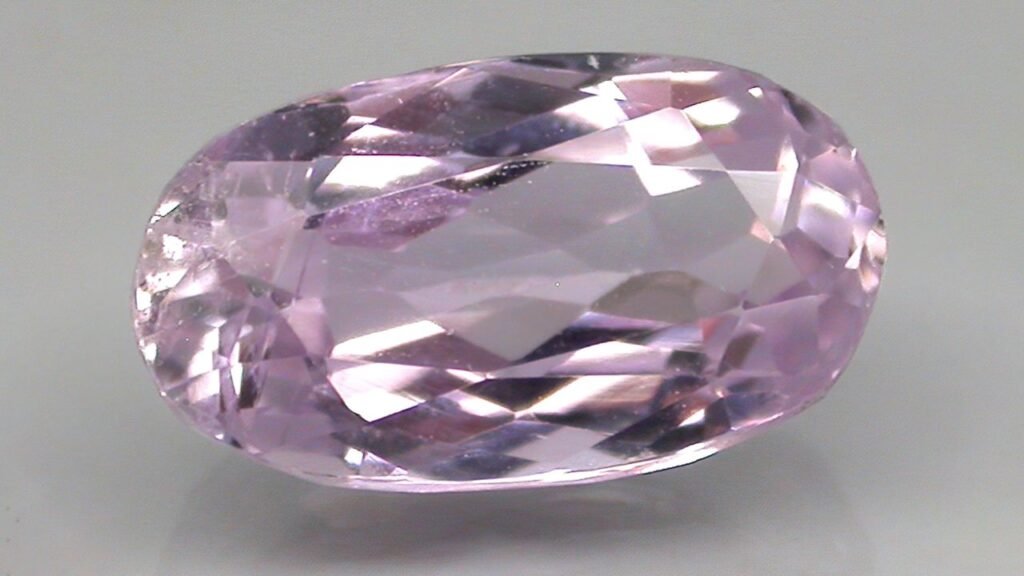
The recommended cleaning method involves warm, soapy water and a soft brush or cloth, ensuring the gem remains vibrant and intact. Proper care allows kunzite jewelry to maintain its elegance for generations.
6. Refractive index
Kunzite typically has a refractive index of about 1.660–1.676, meaning it bends light strongly as it passes through the stone. This contributes to its attractive brilliance and is also an important property for gem identification.
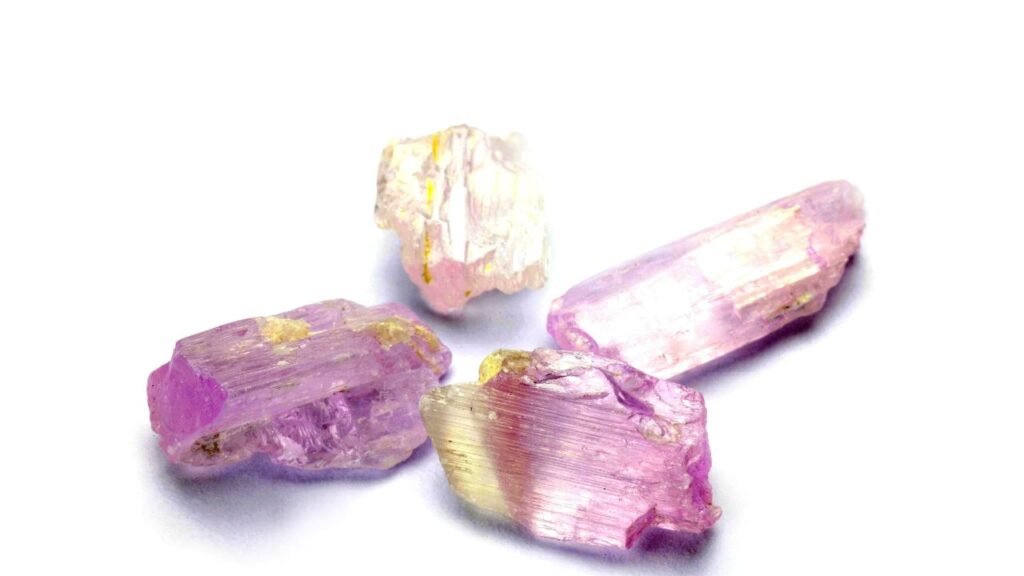
Inspired by the remarkable beauty of kunzite, discover the Gemstone Fusion Wall Art Collection, a curated set of three artistic pieces designed to capture the unique colors and character of this extraordinary gemstone.

📌 Kunzite: Summary
- Discovered in: San Diego, California, in 1902
- Named after: Mineralogist George Frederick Kunz
- Officially named: 1903
- Color: Soft pink, lilac, and purple shades
- Color cause: Traces of manganese
- Value: More vivid colors are generally more valuable
- Major sources: California, Afghanistan, Brazil, Mozambique, and Madagascar
- Famous specimen: The Smithsonian’s 880-carat heart-shaped kunzite
- Hardness: 6.5–7.0 on the Mohs scale